Notting Hill Carnival
This August Bank Holiday weekend, roughly two million people will pack the streets of west London for the 60th year of Notting Hill Carnival. Steel pans, soca, sound systems, stories high, thousands of hand-built costumes, hundreds of food stalls selling everything from jerk chicken to Guyanese pepper pot. What began in the 1960s as an effort to bring the diverse community of Notting Hill together has since become the second-largest carnival on earth, beaten only by Rio, bringing in an estimated £400 million to London's economy each year.
Threatened by police crackdowns and underfunding, Carnival's 60 years has not been guaranteed or taken for granted. This is why this year is such a monumental occasion for the culture and all involved, past and present.
Resilience & joy, the roots of Carnival
By the mid-1950s, Notting Hill was one of the poorer corners of London, and increasingly the home to Caribbean migrants of the Windrush generation. Their presence in the area stirred resentment among white residents.
That resentment turned violent in the last days of August 1958. Gangs of white youths, some organised by a fascist movement, spent more than a week attacking Black residents and their homes across Notting Hill, in disturbances that became known as the Notting Hill race riots. The following May, an Antiguan carpenter named Kelso Cochrane was stabbed to death on Southam Street by a gang of white youths as he walked home from hospital with a fractured thumb. No one was ever convicted. Twelve hundred people, Black and white, joined his funeral procession in a show of solidarity.
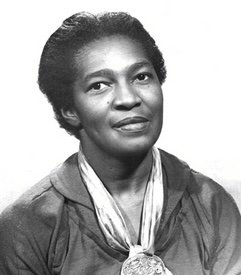
Claudia Jones, the Trinidad-born activist and journalist who had founded Britain's first major Black newspaper, the West Indian Gazette, wanted a joyful show of resilience for a grieving community. In January 1959, she staged an indoor Caribbean Carnival at St Pancras Town Hall, complete with calypso, steel bands and a beauty contest, televised by the BBC. She ran it annually until her death in 1964. She believed that Black joy and cultural pride were themselves a form of political resistance, the root from which everything that followed grew.
Rhaune Laslett & the Notting Hill Fayre
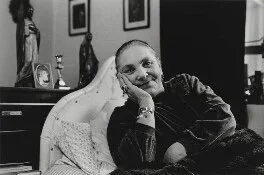
Rhaune Laslett
The event most people now recognise as the first Notting Hill Carnival happened in 1966, and it wasn't originally conceived as a Caribbean carnival at all. Rhaune Laslett, a local social activist who ran a community project wanted to bring the area's fractured communities, West Indian, African, Irish and more, into contact with one another. She later said the idea came to her in a dream: streets full of people in bright costumes, dancing, "black, white, brown, but all laughing."
Laslett invited the Trinidadian steel pan player Russell Henderson and his trio to perform at what was billed as the Notting Hill Fayre and Pageant, part of a week-long programme run by the London Free School. Henderson's band, spontaneously, led a procession out into the surrounding streets with local Caribbean residents joining behind.
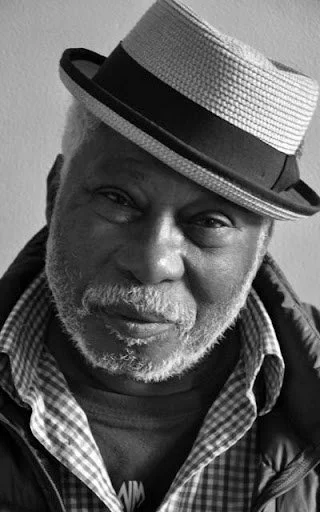
Leslie "Teacher" Palmer
Palmer, Pan and the Sound System Revolution
The carnival that exists today, structured around five disciplines, mas, steel pan, calypso, soca and sound systems, formed under Leslie "Teacher" Palmer, a young Trinidadian teacher who directed the event from 1973 to 1975. Palmer secured sponsorship, recruited more steel bands, extended the parade route and, most controversially, invited static sound systems onto the streets for the first time in 1973, arguing that reggae's bass-heavy sound systems were, in his words, "the voice of the youth and the people." Some steel band purists objected. Palmer held his ground, and the decision is now recognised as the moment Carnival stopped being a single-island celebration and became a genuinely pan-Caribbean, cross-generational event, drawing over 150,000 people by 1976.
That same growth brought fresh conflict. As Carnival's crowds swelled through the 1970s, so did tension between young Black Londoners and a police force that treated the event with suspicion. The 1976 Carnival ended in serious disorder after clashes broke out between attendees and police, a flashpoint that reflected wider hostilities of the era, including the disproportionate use of "sus" stop-and-search laws against Black youth, rather than anything intrinsic to Carnival itself. Rather than ending the event, as some in Whitehall hoped it might, the disorder hardened the community's resolve to keep it, and to run it themselves.
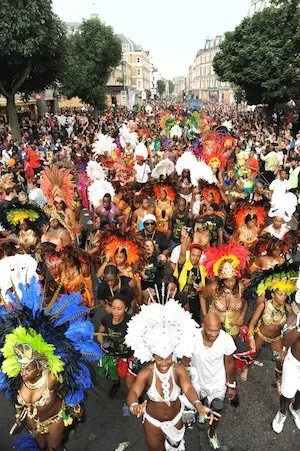
Notting Hill Carnival 2012
Staging Europe's Biggest Street Party
Carnival is a free two-day event run by Notting Hill Carnival Ltd, a community-led organisation whose responsibilities include stewarding, barriers and crowd management for an event that is considered to be the equivalent of staging eleven Glastonbury festivals in a single weekend, with only a fraction of the resources.
Each of the roughly fifty mas bands that parade through the streets operates out of a "mas camp", often a modest community space, where designers, seamstresses and volunteers spend months turning wire, foam, feathers and fabric into thousands of costumes built around a new theme every year. Across all the bands combined, an estimated fifteen thousand costumes are produced annually, representing roughly a million hours of hand decoration. The steel bands, around a dozen orchestras, rehearse through the summer in yards and church halls and more than thirty static sound systems crews who have held the same street corner for over forty years, haul in speaker stacks the size of shipping containers.
The lead up to carnival’s 60th year was marred with uncertainty. Estimated to contribute close to £400 million to London's economy each year, Carnival came worryingly close to not happening at all. It took £4.66 million in emergency funding from the London Mayor, on top of funds already committed, to cover additional stewards and safety measures, some of which shifted responsibility for road closures from the Metropolitan Police to organisers themselves.
The longstanding veterans of Notting Hill Carnival
Sound Systems
Saxon Sound System: Founded in 1976 by Lloyd "Musclehead" Francis and Denis Rowe.
Channel One Sound System: founded 1979 by Mikey Dread and his brother Jah T
Rampage Sound: Founded in 1992 by Mike Anthony, Rampage is the largest static sound system at the carnival.
Gaz's Rockin' Blues: Operated by Gaz Mayall since the early 1980s
Costume Makers and Designers (Mas Bands)
Mahogany Carnival Arts: Founded in 1989 by legendary designer Clary Salandy and Michael Ramdeen
Genesis Mas Band: Helmed for over four decades by the Williams family, this band remains a bastion of traditional costume craft, co-founded by Allyson Williams MBE
Flamboyan Carnival Arts: Operating as a community arts charity since 1985
Steel Pan
Ebony Steel Band: Established in 1969, Ebony is one of the UK's earliest and most decorated steel orchestras
Mangrove Steelband: Rooted deeply in the historical resistance and community organizing of the local Mangrove restaurant was established in 1980
Glissando Steel Orchestra: Formed in 1978 by legendary pan tuner Bertrand Parris
60 years on, Notting Hill Carnival remains a powerful expression of Black British and Caribbean culture, community and creativity. As it enters its seventh decade, its legacy can be seen in the generations of people who have grown up making, playing, dancing and marching through its streets.