The History of Graffiti
Graffiti is as old as time. People have been etching writings on the wall since prehistoric era and ancient civilisation to communicate love, feuds and propaganda. What makes the birth of modern graffiti such a phenomenon is its young creators, and the foothold their work has kept on culture ever since, reaching far beyond the streets it started on and into fashion runways, gallery walls and auction houses.
From the 1960s to 1980s the artistic form of expression of tagging, throw-ups and full-scale pieces gave rise to a generation of teenagers such as Fab 5 Freddy, Basquiat and Goldie, known as "writers," who used public walls and subways to create a movement that ran alongside hip-hop and redrew the language of typography and contemporary art, before crossing the Atlantic into the UK.
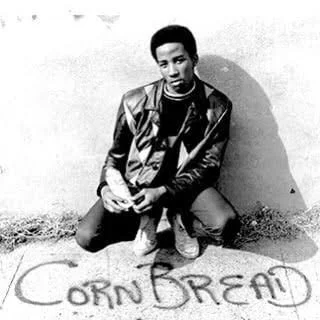
Cornbread
A name, a claim, a community
Modern graffiti started in the packed blocks of Philadelphia and New York, where Black and Puerto Rican teenagers turned to the walls around them to say something about who they were, on streets that rarely gave them the chance. A spray can was "the only significant vehicle to represent their existence." What looked like vandalism to others became their way of curating the world around them. Darryl McCray, a teenager from Brewerytown, Philadelphia is considered to be the first modern graffitiest. During a stint in juvenile detention, Darryl had a run-in with the chef which ended with him getting the name Cornbread. It wasn’t long before the whole facility called him Cornbread and he loved the notoriety that came with it. Upon his release in 1967, he turned the streets of Philadelphia into his canvas. He wanted the streets to know who he was too. And that’s exactly what happened. He would tag his name where all the teens would be, at the bus stops, the basketball courts, and school playgrounds. His tags “Corbread lives” on an elephant at the Philadelphia zoo and on The Jackson 5’s jet catapulted him to legendary status.
New York, it’s over to you
A tag on a Philadelphia wall stayed where you left it; a tag on a New York train travelled the length of the city and back without the writer leaving their own block. New York also came with its own defining styles and large scale work.
In the early 1970s, Lonny Wood, a Bronx teen who wrote as PHASE 2, was the first to perfect the art of rounding his tags into puffed, marshmallow-like shapes called the “softie” style for his moniker, that made his tags recognisable before you'd finished reading them. In his era, PHASE 2 quickly became one of the most copied stylists of his generation. Over the years his lettering grew more complex and more abstract, breaking the letterform down into what the writer Jeff Chang once described as “hard lines, third eyes, horns, spikes, arches, pharaohs and dogs, pure geometrics”. He was also one of the founding members of United Graffiti Artists, the collective behind what's considered the first gallery show of subway writing.
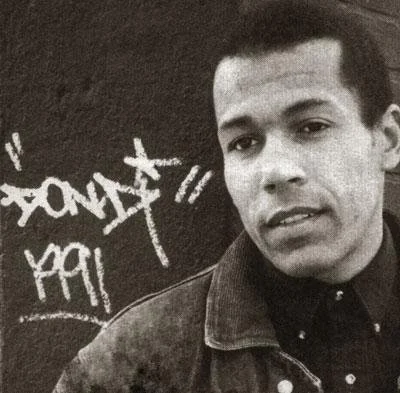
Doni
Donald White, from Brooklyn, wrote as Dondi and took the discipline further, painting entire subway cars top to bottom. His Children of the Grave series, three whole cars completed between 1978 and 1980, is still held up as some of the most accomplished lettering the subway era produced, precise enough to read from a platform and intricate enough to reward standing still.
Fred Brathwaite, who painted with Brooklyn's Fabulous 5 crew as Fab 5 Freddy, wasn't chasing style so much as connection, moving easily between the uptown world of writers and MCs and the downtown scene of punk bands and gallery openings, before earning a shout-out in Blondie's 1981 hit "Rapture" and later hosting Yo! MTV Raps. Without people like him treating graffiti, rap, DJing and breaking as one culture, it's not obvious those worlds would have folded into each other so completely.
Rammellzee took the most theoretical position of anyone in the culture. He developed an entire theory of lettering called Gothic Futurism, arguing the Roman alphabet had been a tool of institutional control since medieval monks standardised it, and that writers, by distorting and arming their letters, were waging a quiet war to take language back. He built costumes and sculptures to match, working out of a studio he called the Battle Station. What happened on a train car at 3am, he insisted, was not decoration. It was an argument.
The war against graffiti
New York didn't just tolerate graffiti reluctantly. It fought it, loudly and for decades. In 1972, Mayor John Lindsay declared a war on graffiti, describing writers to the press as insecure and pathological, and reclassifying what had been treated as a nuisance into a criminal offence. Even as the city teetered on the edge of bankruptcy through the mid-1970s, it found tens of millions of dollars a year for razor wire and guard dogs around train yards, chemical washes strong enough to injure the workers using them, and an entire fleet of subway cars repainted white to shame writers out of the culture. The white cars were bombed within weeks. The MTA's Clean Car Program, launched in 1984, finally beat the trains by pulling any tagged car from service the moment it was spotted. By the time the last graffiti-covered car was withdrawn on 12 May 1989, the city had spent roughly $300 million on a clean up war program. All the while, the same work being scrubbed off at enormous public expense was being hung, admired and sold a few miles downtown. Illegal on the platform, collectible in the gallery.
Tagger to superstardom
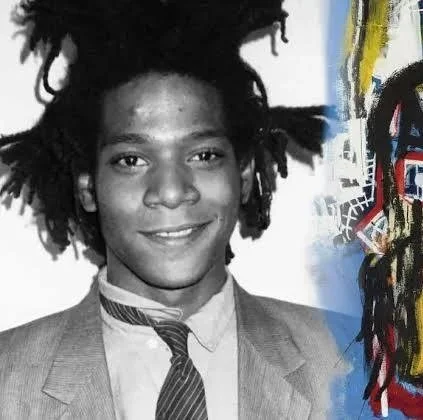
Basquiat
Nobody complicates that line between crime and art quite like Jean-Michel Basquiat. As a teenager, he and his friend Al Diaz tagged Lower Manhattan under the name SAMO©, pairing the tag with cryptic, satirical one-liners about religion and consumerism rather than repeating a name, closer to conceptual text art than a subway throw-up. In June 1980, Basquiat exhibited at the Times Square Show, an unruly exhibition organised by the artist collective Colab with Fashion Moda, a South Bronx gallery, which put downtown artists and uptown writers, Fab 5 Freddy and Lee Quiñones among them, in the same room. Basquiat quickly graduated from a homeless graffiti tagger to a 1980s neo-expressionist superstar, whose 1982 skull painting sold for $110.5 million.
Getting the culture on the record
Because the work itself was buffed off trains within weeks, a handful of films and books between 1982 and 1987 did as much to shape graffiti's legacy as any single writer. Charlie Ahearn's Wild Style (1982) dramatised the whole interconnected world through Lee Quiñones and Lady Pink; Style Wars (1983) filmed the running battle between writers and the transit authority as it happened. Henry Chalfant and Martha Cooper's Subway Art (1984) travelled, teaching writers thousands of miles from New York the culture's visual grammar from its pages. By 1987, Chalfant and James Prigoff's Spraycan Art was documenting writers across Europe, which was proof of how far the culture had spread
The UKs graffiti scene
Political slogans, football-terrace scrawl and punk's DIY stencilling were already part of British street life by the late 1970s. What arrived from America in the early 1980s landed inside a Black British youth culture of reggae and dub, blues parties in front rooms and community halls, sound systems assembled by hand in cities like London, Birmingham and Wolverhampton, all against a backdrop of discrimination, heavy policing and rising unemployment.This new form of graffiti and Hip-hop came as a package that was embraced and made into something with a unique British take
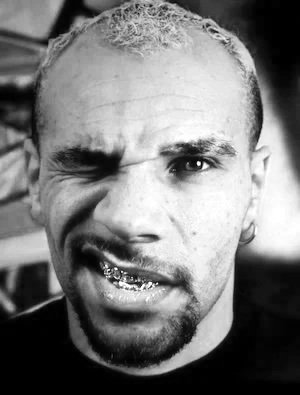
Goldie
Mode 2, whose name still remains anonymous, was born in Mauritius in 1967 and raised in Lewisham among punk, reggae and Saturday-night sound systems. Mode 2 found his way into the scene through Covent Garden, then the centre of London's small hip-hop world, spending his summer there after finishing school exams in 1984. Already able to draw, he picked up a marker and can, painting banners and customising jackets for the dancers and MCs around him. He built a name first alongside Scribla, then with Zaki Dee, Eskimo and Xerox as The Trailblazers, before forming Chrome Angelz in spring 1985. Where much of New York's writing leaned aggressive, Mode 2 used lettering to find humanity in dehumanised urban environments. By 1987 his work was on the cover of Spraycan Art, He is widely considered to be one of the greatest of his generation.
Clifford Price found graffiti before he found the name Goldie, and it found him at a hard moment. He grew up in and out of foster homes around Wolverhampton's Heath Town estate, in circumstances that included racial and physical abuse, struggling at school until a teacher noticed he could draw and pushed him towards it. Graffiti became where that talent went. Heath Town's Brutalist tower blocks had an informal gallery running up their stairwells, known locally as the Stairway to Fame, and Goldie's name was soon part of it, alongside pieces like Cry from the Ghetto and the sci-fi tableau Tomorrow's World that turned grey concrete corridors into something closer to Blade Runner. The 1987 documentary Bombin', which followed New York writer Brim Fuentes on a visit to the UK, connected him properly to the culture he'd only known through photographs, Price has since described Subway Art as something close to scripture for his generation. The instinct for building an identity and commanding attention in public didn't disappear when he put the cans down. It resurfaced in Metalheadz, the drum and bass label he co-founded in 1994, and Timeless, the 1995 album now regarded as one of the genre's defining records.
The legacy
In 2023, London's Saatchi Gallery put on a major graffiti and street art exhibition called Beyond the Streets, with works from Fab 5 Freddy, Lady Pink and Futura 2000 alongside Goldie, Mode 2 and Robert Del Naja, the American originators and the British writers who took their lead and built something distinctly their own, sharing wall space decades after any of them first picked up a can. Mode 2 still exhibits regularly across Europe, his work now held by the V&A and the Fondation Cartier in Paris, cities he first painted in as a teenager. Nearly 60 years on and the writers still have our attention.