Windrush: The Generation That Rebuilt Britain
On 22 June 1948, the HMT Empire Windrush docked at Tilbury, Essex. On board were just over a thousand passengers, more than eight hundred of them from the Caribbean, Jamaicans, Trinidadians, Barbadians, people from across the islands who had booked a crossing on a British troopship that happened to be sailing with space to fill.
With British passports, they were considered British subjects. Some had served in the RAF during the war. They had been told, and many genuinely believed, that Britain was the mother country, a place whose history, institutions and values were theirs by right of empire. Even though they would go on to change the landscape of Britain with their skills, food, music, fashion and language, what they found when they arrived was a country that needed their labour but did not want their presence.
Post-war Britain was running on empty. The NHS had been founded that same year and needed staff immediately. London Transport could not fill its rosters. Factories, foundries and building sites were short of workers. The government looked to the Caribbean not out of generosity but out of urgent practical need, and the people who answered that call came prepared to rebuild Britain.
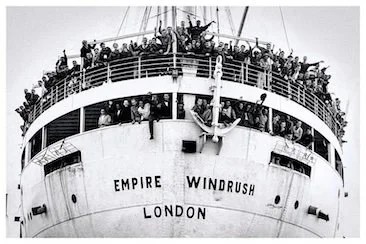
HMT Empire Windrush
Hostile Welcome
The hopeful Caribbeans were met with hostility. Landlords refused Black lodgers. Banks turned people away. Pubs and clubs operated colour bars that were entirely legal and widely practised well into the 1960s. This was not incidental hostility, it was the texture of daily life, a steady accumulation of closed doors that forced a resilience and resourcefulness typically synonymous with the generation.
The Windrush Generation’s Resilience & Resourcefulness
One such demonstration of this is with the Pardner. A savings system, a group of people agree to pool a fixed sum of money each week or month, and each member takes the full pot in turn. No bank required. No credit check. No one deciding whether you were a suitable customer. Pardner financed furniture, covered rent in the lean months, and for many people made the purchase of a first property possible in a market that was not eager to sell to them. It was the kind of practical, communal financial intelligence that had sustained Caribbean communities for generations, and in 1950s Britain it became something people relied on.
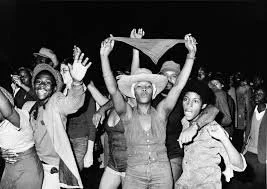
The rich culture of music and food wasn’t left behind on islands (we are so grateful). Blues parties, held in front rooms and basements across Britain became the social scene. Then it expanded. Sound systems imported from Jamaica and Trinidad filled halls and eventually streets. The parties and events kept people and community connected to each other across cities that could otherwise be profoundly isolating.
Claudia Jones was an instrumental community builder. The Trinidadian activist and journalist had founded Britain's first major Black newspaper, the West Indian Gazette, and in 1959 she organised an indoor Caribbean carnival, a direct response to the Notting Hill race riots of the previous year, in which white mobs attacked Caribbean homes and businesses across several nights while police largely stood by. Jones understood that what the community needed was not only political organising but a public assertion of presence. What she started became the Notting Hill Carnival, now one of the largest street festivals in Europe..
Rebuilding Britain
While that culture was being built outside the institutions, Caribbean people were also holding those institutions together from within. Caribbean nurses staffed the NHS from its earliest years, frequently after being told that their qualifications did not count in Britain, and having to re-qualify for roles they were already trained and experienced to do. London Transport ran a direct recruitment programme in Barbados from the mid-1950s to fill gaps in its bus and Underground workforce. The Post Office, the foundries, the building sites, the infrastructure of modern Britain was kept running in the post-war decades by people the same society was simultaneously refusing to house, serve and treat as equals.
The clearest illustration of that contradiction was Enoch Powell. As Minister of Health between 1960 and 1963, he actively recruited Caribbean nurses to stabilise an NHS that would otherwise have struggled to function. Eight years later, he stood before the cameras and delivered the Rivers of Blood speech, warning of violence and national dissolution if immigration continued. He was speaking, in part, about the very people whose labour had propped up the public health system he once ran.
Against All Odds
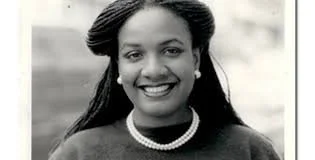
But Black Britons against all odds have achieved a tremendous amount of success. Sam King had arrived on the ship itself in 1948, having served in the RAF during the war. He went on to become the first Black mayor of Southwark and spent years working to help Caribbean migrants purchase homes and build stable lives. Bill Morris, the son of Jamaican immigrants, became the first Black general secretary of the Transport and General Workers' Union, then one of the most powerful positions in British organised labour. Diane Abbott, born in Paddington in 1953 to Jamaican parents, her father a welder, her mother a nurse, became the first Black woman elected to British Parliament in 1987. Bernie Grant won his seat that same year and spent his parliamentary career as one of the most uncompromising advocates for racial equality the House of Commons has seen.
The Windrush Scandal
That political reckoning had been a long time coming. But the remnants of Enoch Powell’s racist anti-immigration rhetoric had been fortified institutionally and systematically. In 2018, it emerged that the Home Office had been threatening members of the Windrush generation, those who had lived, worked, paid taxes and raised families in Britain for fifty or sixty years, with deportation to countries many had not seen since childhood. They could not produce documentation the government itself had never required them to keep and, in some cases, had actively destroyed. People lost jobs and were detained and continue to fight for justice.
A Generation Undefeated
And yet, through it all from the colour bars, injustice and the scandal remains a generation that has changed modern Britain for the better, establishing a multicultural society.