Audre Lorde, The Iconic Black Feminist
Audre Lorde, described herself as a "Black, lesbian, feminist, socialist, mother, warrior, poet". She was all these things in equal measure and was a pioneering voice in dismantling the singular idea of identity, specifically as a Black woman. Lorde dedicated her life to speaking out against sameness, as prerequisite for unity. And she spoke out against the systemic oppression that intertwines racism, sexism, classism, heterosexism and homophobia. Her voice laid the groundwork for the coined term intersectionality. She is the recipient of many awards including the American Book Award, whose literary work and activism fundamentally shifted how society discusses identity and power.
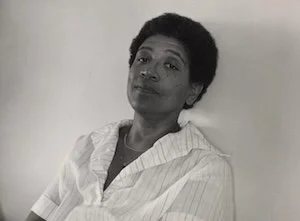
Audre Lorde
Born Audrey Lorde in Harlem, New York in 1934, she dropped the “y” from her name as a child because she didn’t think it was aesthetically pleasing. The youngest of three sisters, she was brought up in a strict Catholic household by Caribbean immigrant parents, who were described as “hardworking but never affectionate.” Her mother was very light-skinned, and in fact was white passing. Audre, although light skinned herself, was the darkest of her siblings and was treated differently because of it. In her family she felt like an outsider. This feeling of being “othered” and an “outsider” would influence her groundbreaking work to come.
Lorde wrote poetry as a young child and said “I literally communicated through poetry. And when I couldn’t find the poems to express the things I was feeling, that’s what started me writing poetry, and that was when I was twelve or thirteen.” At the age of 15 she was editing her school newspaper and by 17 her poem “Spring” was published in Seventeen magazine in 1951. She continued to write for different platforms, including being published by Langston Huges.
1960s and 1970s: Lorde the Lesbian Poet & Activist
Lorde’s activism in the 1960s and 1970s was all about breaking internal and external silences and not being placed in a box. She was actively involved in the civil rights movement, early women’s liberation movement and antiwar campaigns.
In the late 1960s, she moved to Mississippi to teach at Tougaloo College, a historically Black college. As a New Yorker, she was completely transformed by the raw intensity of the Civil Rights movement in the deep South, she knew then that language is a literal tool for survival.
In 1970, Lorde took a massive personal and political risk by publicly coming out as a lesbian in her poetry collection Cables to Rage. Homosexuality, in the State of New York was not decriminalised until 1980, and she had to toe a thin line of being Black, a woman and a lesbian to navigate the circles of the different movements, where there wasn’t consolidated acceptance for her full identity across all of them. She fiercely believed that hiding who you are only protects the status quo, famously writing, "your silence will not protect you."
By the 1970s, Lorde became a powerful, necessary disruptor within the mainstream feminist movement. She called out white, middle-class feminists for ignoring how race and class compound gender discrimination, dropping her most famous truth at a 1979 conference: "The master's tools will not dismantle the master's house." She knew that true liberation meant embracing differences rather than erasing them, arguing that "it is not our differences that divide us, but our inability to recognise, accept, and celebrate those differences." To give women of colour a place to tell their own stories without being censored, she teamed up with activist Barbara Smith to launch Kitchen Table: Women of Color Press.
Audre Lorde & Her Relationship with Africa
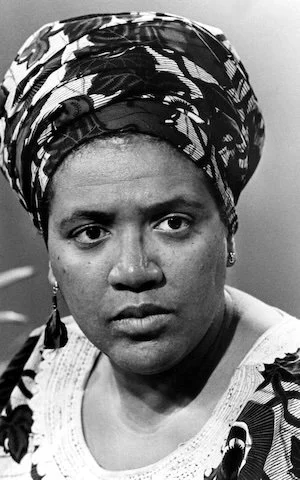
Audre Lorde
Lorde's relationship with Africa was a lifelong tension between longing to be connected to her ancestral roots and reality. Her first visit in 1974, she travelled through Togo, Ghana, and Dahomey (now Benin) with her children and white partner Frances. Ghana in particular was a deeply emotional and sensory experience that had the taste of a rock cake in Kumasi echoing a diasporic memory that stretched back through Harlem and the Caribbean to West Africa.
Lorde visited again, as part of a large African American contingent to the month long cultural event FESTAC '77 in Nigeria. It came with constraints: patriarchy and heteronormativity within the group meant she kept her distance, playing straight, navigating the painful irony of feeling like an outsider in a space meant to celebrate Black unity.
Africa, undoubtedly transformed her, not only through the trips themselves but through what she made of them in her work and self-presentation. After returning in 1974, she began appearing publicly in dashikis and geles, adorned with beads and jewellery, embodying the African foremothers she wrote about. Her poetry, particularly in The Black Unicorn (1978), wove Yoruba and Dahomean deities, Oshun, Shango, Yemoja, Eshu, into a personal mythology that drew on African spiritual traditions as resources for living with difference.
The 80s: Lorde Faces Mortality
In the 1980s, Audre Lorde’s activism went through a notable shift: Her work became unsparing. Facing a terminal cancer diagnosis, Lorde was filled with a sense of urgency to focused on building international solidarity, co-founding independent institutions, and documenting her personal health battles as a political act of survival.
In her deeply personal 1980 book, The Cancer Journals, she reframed health as a political battleground, writing, "Caring for myself is not self-indulgence, it is self-preservation, and that is an act of political warfare." Her definitive essay collection, Sister Outsider, in 1984, spoke a lot about the creative potential of difference rather than the destructive potential of it. "It is not our differences that divide us, but our inability to recognize, accept, and celebrate those differences."
The utility of her words built her a massive international network. That same year she published Sister Outsider, she took a guest professorship in West Berlin and accidentally became a catalyst for history, bringing isolated Black German women together and kickstarting the modern Afro-German political movement.
Audre Lorde’s Legacy
Audre Lorde died of cancer in Saint Croix on November 17, 1992, aged 58, having chosen to spend her final years in the Caribbean. She didn’t live to see the full weight of what she had set in motion. Decades after her death we see the imprints of her work. The intellectual frameworks she built, around difference as strength, the political necessity of self-care, and the master's tools, went on to run through the work of bell hooks, Angela Davis, and Patricia Hill Collins, and laid the groundwork for what Kimberlé Crenshaw would formally name intersectionality. The Movement for Black Lives, fourth-wave feminism, and queer liberation movements all draw on Lordean principles, even when they don't cite her directly. Angela Davis, who knew Lorde personally, perhaps put it best. "She taught us that we cannot ignore the internal work of transformation while we are working to change the world outside."