

10 Pivotal Moments In Black British Music
Black British music can quite easily be defined by eras. The sounds are intrinsically linked to the Black British experience and a direct reflection of the times. Creating some of the most innovative, unapologetic, influential music in the world, Lovers Rock roots to UKG (Garage) and Grime.
Today, we get to see many of our favourites dominating charts and selling out concert venues. The commercial success we see today is a giant leap away from those who preceded them. Navigating the music industry as a Black British artist meant facing a lot of questions and having a lot of challenges thrown their way. When all they would have wanted to do was make and share their music. Some compromised for a taste of mainstream and others refused entirely. That refusal is where some of the greatest music this country has ever produced came from. These are the ten moments that built it.
01. Windrush & West African Arrival: Building Black Britain (1948–1980s)
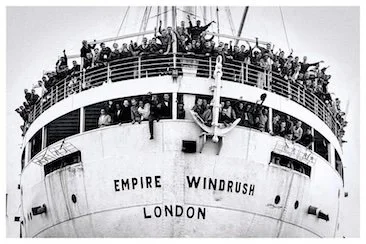
HMT Empire Windrush
These are not exactly musical moments, but we would be remiss not to highlight how migration shaped everything that followed. The Windrush generation arrived in 1948, bringing calypso, mento, blues, jazz, and gospel. They were met with hostility, but despite this built their own cultural world, the shebeens, the blues parties, the sound systems laying the foundation of Black British culture.
What is less commonly known is that simultaneously, a significant wave of West African migrants, primarily from Nigeria, Ghana and Sierra Leone, were also arriving. Unlike the Windrush generation, who came as permanent settlers, many West Africans arrived to study, bringing with them entirely distinct musical traditions: Highlife from Ghana, Juju music from Nigeria, the deep rhythmic complexity of West African percussion. By the mid 1970s and 1980s, West Africans were settling down in Britain instead of returning post studies.
These are two diasporas, different histories, different relationships with Britain and over the decades their sounds would blend, collide, and transform into something entirely new.
02. Lovers Rock (1970s)
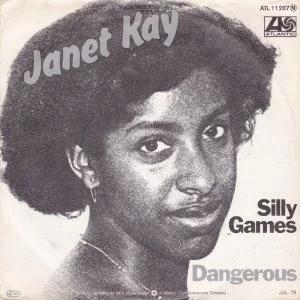
Janet Kay “Silly Games”
Born in the mid-1970s in south London, not imported, not borrowed, but created. Lovers Rock was the first music that was specifically, unapologetically Black British. Producer Dennis Bovell described the mission as making "the equivalent of Motown in reggae, with the new Supremes from south London." It gave women a genuine voice in a reggae scene that was almost entirely male-dominated, and it spoke directly to the experience of being young, Black, and British in a way the mainstream refused to.
Janet Kay's “Silly Games” (1979) reached number two, the highest chart position for a Black British woman at that point. However, mainstream success didn't open up. British Radio stations refused to platform British reggae unless they were on a major label. Eventually, Jamaican producers absorbed the sound and took it back to Jamaica. Even though Lovers Rock did not get widespread mainstream success, it influenced the Police, Culture Club, and Sade. The sound travelled further than British credit ever gave.
03. Two-Tone, Soul & the Underground (1980s)
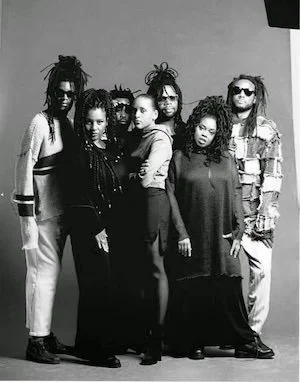
Soul II Soul
The 1980s is one of the most politically charged decades in Black British history. Thatcher tripled unemployment, dismantled communities, and had campaigned with the warning that Britain was being "swamped" by non-white people. For Black communities already navigating institutional racism and the Sus law, it was a daily material reality that poured into the lyrics and the music. Two-Tone fused Jamaican ska with punk energy. It was the first direct response to the racial tension. The Specials' Ghost Town reached number one in the summer of 1981 while Brixton, Toxteth, and Handsworth were burning. It remains one of the most precise documents in British music history of a song mirroring the exact moment that produced it.
Underground, the infrastructure was being built to sustain Black British music. Sound systems, like Jah Shaka, Coxsone, and Saxon Studio International, became the community's own A&R and distribution. In 1981, DJ Lepke had launched the Dread Broadcasting Corporation, the UK's first Black-owned pirate station. By the end of the decade, there were 600 pirate stations nationwide.
It is out of that infrastructure, not from a record deal that a defining act emerged. Jazzie B began Soul II Soul as a sound system in the early 80s. By the time “Back to Life” reached number one in 1989 and topped the charts globally, it maintained its Black British authenticity. Nothing smoothed down. Nothing softened. Soul II Soul didn't navigate the palatability question. They made it irrelevant, and every genre that followed pushed that attitude further.
04. Jungle (Early–Mid 1990s)
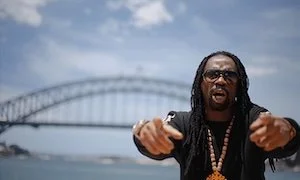
General Levy
Jungle emerged from the rave scene around 1992–93. It was chaotic, fast, and shaped by ragga and sound system culture. When the Criminal Justice Act 1994 effectively criminalised gatherings built around "a succession of repetitive beats," the scene's response was to go harder and deeper underground. Jungle was the sound of a community told to be quiet, turning the volume up. Its relationship with mainstream attention was almost allergic. When General Levy told the press he was "running jungle" after Incredible reached number 39 in 1994, the underground turned on him immediately. Mainstream visibility wasn't the goal.
05. Drum and Bass (Mid–Late 1990s)
Drum and bass evolved from jungle around 1994–95. It was darker, more atmospheric and more technically ambitious. Goldie's 1995 album Timeless, released on his own Metalheadz label from the Blue Note club in Hoxton, was proof that Black British underground music could reach serious artistic ambition without any concession to commercial expectation. Roni Size and Reprazent won the 1997 Mercury Prize against a shortlist including Radiohead and The Prodigy; it was the first drum and bass record taken seriously by mainstream critics.
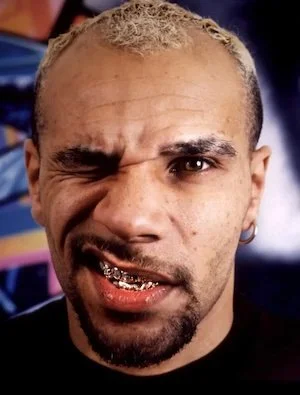
Goldie
06. Trip-Hop (Early–Mid 1990s)
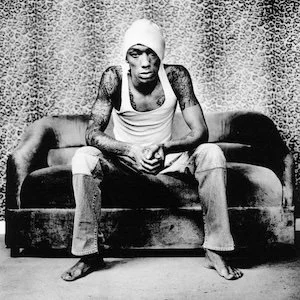
Tricky
If drum and bass was collective energy, trip-hop was its mirror image: interior, uneasy, deeply personal. Trip-hop is often discussed as if it sits outside the Black British music history, because a lot of the main acts are Caucasian. However, that is irrelevant. Massive Attack came directly out of Black Bristol's Wild Bunch sound system, with their lead member, Tricky, who would become one of Trip-Hop's breakout stars.
Tricky's 1995 debut Maxinquaye drew on hip hop, dub, punk, and R&B and produced something that sounded like none of them. At a time when Black British music was expected to be either rooted in African tradition or be soulful crossover-friendly, Tricky inhabited neither space. He did not care to be what music A&Rs expected a Black man to be.
07. UK Garage & Funky House (Late 1990s– early 2000s)
UK Garage took jungle's energy and gave it a smoother, more soulful edge, a distinctive 2-step rhythm fused with American house and R&B but filtered entirely through a Black British lens'. Before it was an artist's medium it was a DJ culture, built through pirate radio Rinse FM, Déjà Vu, Raw FM. Illegal broadcasts were regularly shut down by Ofcom and the police.
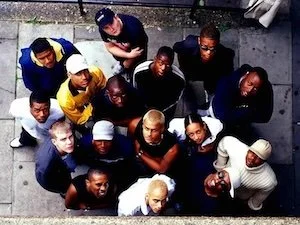
So Solid Crew
So Solid Crew's “21 Seconds” reached number one in 2001 while the group was simultaneously blamed for youth violence in a moral panic that said far more about the establishment's discomfort with Black British success than it did about the music. Venues cancelled their gigs. Local councils used licensing laws to shut down Garage events. The pattern was familiar: Black music breaks through, and when it gets too specific too Black, too honest the establishment reaches for the language of criminality.
Out of that same ecosystem came funky house drawing on tribal, soulful, and bassline house influences, it became the soundtrack to the raves and club nights of Black British youth in the early-to-mid 2000s. What made it distinct was its function as a creative melting pot: artists from across the Black British music spectrum moved freely through it. Donae'o fused garage sensibility into Funky House with “Party Hard” and “African Warrior”. Even Boy Better Know, a Grime collective, stepped into the space with “Too Many Men”.
08. The US Hip Hop Pull (Late 1990s–2000s)
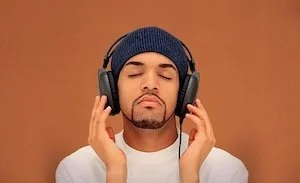
Craig David
At the same time Garage was building its own world, a significant strand of Black British music was being pulled in the opposite direction, toward America. Craig David received critical success with his first album, which was heavily influenced by UKG and British soul. But his sophomore album slanted to a US tone and feel….and it did not live up to the hype.
US hip hop was a cultural force unlike anything the industry had seen. For Black British artists navigating a music business that still didn't know how to market them, adopting the language, cadences, and aesthetics of American rap felt like the clearest route to mainstream visibility. The logic was understandable. The results were complicated. Artists who adopted US flows and production styles often found themselves in no man's land, not American enough for the US market, not British enough to build a lasting home audience.
09. Grime: Built From Nothing (2010s - Present)
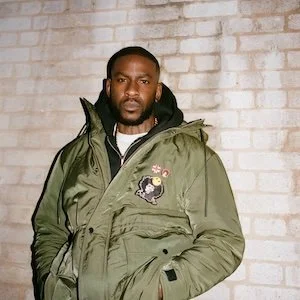
Skepta
Grime succeeded garage in the 2010’s. They created their own infrastructure with the likes of Channel U, SBTV to promote artists and independent record labels like Boy Better Know gained mainstream success. Boy Better Know proved Black British artists could own their careers without a major label.
Dizzee Rascal's Boy in da Corner, recorded in his bedroom, won the Mercury Prize when he was 19, one of the most viscerally honest documents of what it meant to be young, Black, and working-class in London at the turn of the millennium. A decade later, Skepta's Konnichiwa won the same prize, completing a loop. Grime, which the mainstream had spent years ignoring, had become the most vital British music of its generation. Stomzy, Dave and Central Cee are all global Grime stars with mega success.
10. Beyond Category, Black British Avant-Garde (2010s - Present)
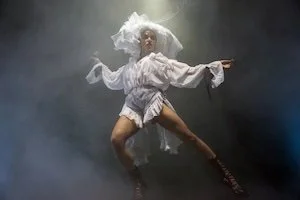
FKA Twigs
Some artists don't fit the available labels Sampha and FKA Twigs are examples of what that looks like when it becomes a creative position rather than a problem to solve. Both are better understood as auteurs: work drawn from R&B, soul, and electronic music but driven entirely by personal vision. Sampha's Process sits in a lineage running through Sade's emotional restraint and Massive Attack's atmospheric weight. FKA Twigs sits closer to Tricky's psychological interiority and deliberate difficulty. What they represent is the fullest expression of everything this article has been building toward. Black British music is not a monolith. It never was. It is bold and tender, collective and interior, political and personal. A direct reflection of the full complexity of Black British life.
