

Black LGBTQ+ Icons
For much of the West, June is a time when Pride brings together the LGBTQ+ community and allies to celebrate identity, community, and hard-won freedoms. But Pride was not born as a celebration. It began as a riot: a defiant response to police brutality, ignited by the June 1969 uprising at the Stonewall Inn in New York City. Marsha P. Johnson is rightly celebrated among its leaders, but the courage of living loudly and unapologetically Black and queer did not begin that night, nor did it end there. Across the world, there are places where being openly queer, trans, or bisexual still carries real danger. Here, we celebrate some of the Black queer figures from around the globe who shaped what Pride means today.
Sister Rosetta Tharpe (1915-1973) The Black queer godmother of Rock 'n' Roll
Born Rosetta Nubin in Cotton Plant, Arkansas in 1915, Sister Rosetta Tharpe is one of the most widely recognised and celebrated musicians of the twentieth century. Tharpe pioneered the blending of electric guitar with gospel and blues, forging the sound that would become rock 'n' roll and she was doing it in the 1940s, years before Elvis Presley and Little Richard, both of whom credited her as a defining inspiration. Tharpe was as openly bisexual as the era allowed. Her relationship with fellow singer Marie Knight, with whom she toured America in the late 1940s, was widely known throughout the music industry. She was inducted into the Rock and Roll Hall of Fame in 2018, forty-five years after her death.
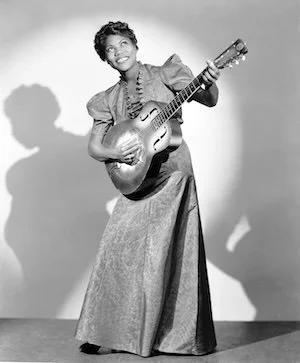
Sister Rosetta Tharpe
James Baldwin (1924-1987) Black, queer and one of the defining writers of the 20th Century
In 1956, James Baldwin published Giovanni's Room, a novel about a love affair between two white men in Paris. His American publisher, Knopf, urged him to burn the manuscript, warning the book would alienate his Black readership and destroy his career. Baldwin moved it to Dial Press, where it was published that same year. The novel received critical acclaim from predominantly white critics, while many African American critics responded with hostility. Despite the divided reception, Giovanni's Room went on to become one of the most celebrated works of twentieth-century literature. Its impact on queer culture is profound: it offers a humane portrayal of homosexual desire, shame, and internalised homophobia, challenging the rigid social constraints of 1950s America showcasing the painful struggle to accept one's own identity.
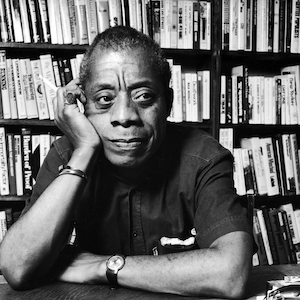
James Baldwin
Marsha P. Johnson (1945-1992) The Stonewall trailblazer who paid no mind
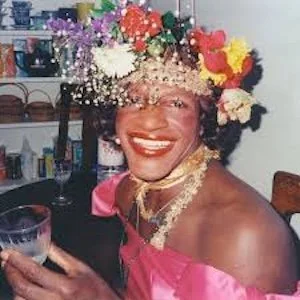
Marsha P. Johnson
If you only know one Black queer figure from Pride, you likely know her face. Marsha P. Johnson has become one of the most recognisable figures in LGBTQ+ history. During her lifetime, Johnson described herself as a gay person, a transvestite, and a drag queen, and used she/her pronouns; the term "transgender" only became commonly used after her death.Though she used she/her pronouns and lived as a woman, she often answered questions about her gender or identity with the phrase "Pay It No Mind" the origin of the 'P' in her name. As she once put it: "I try and pay a lot of little things that happen to me in my life absolutely no mind."
Johnson moved to New York in 1963 at the age of 17, reportedly with $15 and a bag of clothes. At the time, cross-gender dressing was illegal in New York, and Johnson was repeatedly arrested for wearing dresses and makeup in public. Unable to find steady work, she turned to sex work to survive. She performed in drag alongside other gay entertainers in gay bars across the city, which were raided regularly by the police.
This is exactly what was happening at the Stonewall Inn on the night of 28 June 1969. By the time Johnson arrived, the uprising was already in full swing. She did not start the riot, but she stood at the frontline and ultimately became the face of it.
In 1970, Johnson and lifelong friend Sylvia Rivera, a Puerto Rican trans woman, co-founded STAR: Street Transvestite Action Revolutionaries. They sheltered homeless trans youth, fought for prison reform, marched alongside the Black Panthers, and demanded the wider LGBTQ+ movement stop pretending trans people were a problem to be managed. In 1973, the New York Pride march organisers banned drag queens, including Marsha from participating, claiming they made the movement look bad. Marsha and Sylvia marched at the front of the parade anyway.
On 6 July 1992, Johnson's body was found in the Hudson River. She was 46. Police initially ruled it a suicide a verdict her friends rejected. The case was reopened in 2012, and the cause of death was officially changed to undetermined. Today, a state park in New York named in her honour: the first ever named after an openly LGBTQ+ person.
Pearl Alcock (1934-2006) The Black bisexual woman behind Brixton's only gay bar
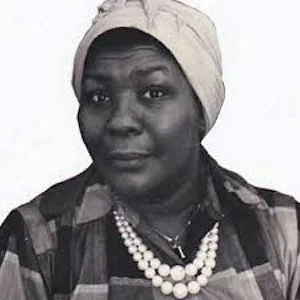
Pearl Alcock
Pearl Alcock, born Pearlina Smith in Kingston, Jamaica, arrived in the UK when she was 25 years old. Like many of the Windrush generation, she was met with hostility in Britain. But by the mid-1970s she had settled in Brixton and built a life for herself owning a clothes shop, and opening a shebeen (an unlicensed bar) in the basement below.
Pearl was openly bisexual, and her shebeen simply known as Pearl's, was the only gay bar in Brixton. It became a safe haven for Black queer people, particularly gay men from the Caribbean: a joyous space free from racism and homophobia. This mattered all the more because on the same street stood a pub called The George, which was openly racist and homophobic, refusing entry to Black and gay customers alike.
Pearl's closed in the early 1980s, due to a combination of forces: Thatcherite policies that were actively shutting down shebeens, rising racial tensions, and the broader tensions of Brixton that culminated in the 1981 uprisings. After closing Pearl's, she opened a café in Brixton, and later became an artist. Pearl Alcock passed away in London on 7 May 2006, aged 72. Her shebeen was an act of love and defiance at a time when being openly Black and queer in the UK was radical and dangerous. Bernardine Evaristo immortalised Pearl's in her Booker Prize-winning novel Girl, Woman, Other.
FannyAnn Eddy (1974-2004) The Sierra Leonean activist who told the UN "silence creates vulnerability"
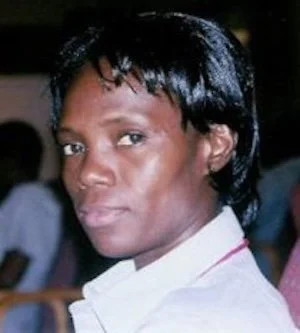
FannyAnn Eddy
FannyAnn Eddy was born in 1974 and spent much of her early life in refugee camps, displaced by the eleven-year civil war that tore Sierra Leone apart. When the war ended in 2002, she went home and immediately began campaigning for LGBTQ+ rights. She founded SLLGA, the Sierra Leone Lesbian and Gay Association, which documented arrests, beatings, and harassment of LGBT people, and provided support to a community that had been forced underground. She helped build the Coalition of African Lesbians, all while raising her son, Valentine.
In April 2004, FannyAnn spoke at the United Nations Commission on Human Rights in Geneva. Her speech that day contained one of the most quoted lines in modern queer history: "Silence creates vulnerability. You can acknowledge that we exist, throughout Africa and on every continent, and that human rights violations based on sexual orientation or gender identity are committed every day."
Five months later, she was dead. On the night of 28 September 2004, FannyAnn was working alone in the SLLGA office in Freetown. She was raped, stabbed, and her neck was broken. She was 30 years old. To this day, no one has been convicted of her murder. SLLGA still operates under the name Dignity Association. FannyAnn Eddy was an extraordinary person with immense bravery and integrity, who gave her life for LGBTQ+ human rights.
Lady Phyll (1974-Present) The co-founder of UK Black Pride
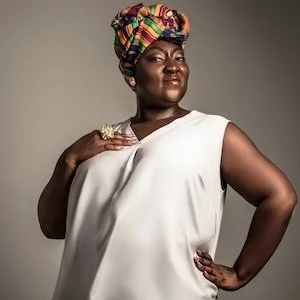
Lady Phyll
Phyllis Akua Opoku-Gyimah, known to most as Lady Phyll is a Black British LGBTQ+ rights and anti-racism campaigner who has spent her life fighting injustice and uplifting communities. Born in Islington to Ghanaian parents, she found her activist voice early and has never stopped. She co-founded UK Black Pride, serves as a trustee at Stonewall, and sits on the Trades Union Congress (TUC) race relations committee.
The idea for UK Black Pride came in 2005, when Lady Phyll and a group of queer Black women from the online network Black Lesbians in the UK (BLUK) organised a day trip to Southend-on-Sea. The sense of community they found that day was the spark. What began as a few hundred people has grown into the world's largest celebration for LGBTQ+ people of African, Asian, Caribbean, Middle Eastern and Latin American descent. Free to attend, rooted in community, and drawing 25,000 annually. In 2025, UK Black Pride celebrated its 20th anniversary.
In 2016, Lady Phyll was nominated for an MBE. She turned it down, a public protest against the persecution, torture and killing of LGBTQ+ people across Commonwealth countries, and against an honours system still rooted in Britain's colonial past. It was exactly the kind of move that defines her: principled, uncompromising, and impossible to ignore.
