Black Trailblazers In Space: NASA's Hidden Heroes
Space exploration is often told as a story of nations and machines, of geopolitical rivalry, engineering audacity, and the sheer industrial might required to slip free of Earth's gravity. But threaded through that story, frequently pushed to its margins, is another history: one of Black Americans who contributed to every chapter of the space age, from the calculating pools at Langley in the 1950s to the Orion capsule that lifted off in April 2026. This is that history.
Katherine Johnson, Dorothy Vaughan, and Mary Jackson: The Human Computers
Among the most extraordinary yet long-overlooked figures in the history of space exploration are Katherine Johnson, Dorothy Vaughan, and Mary Jackson, three Black women whose brilliance helped carry humanity beyond the atmosphere. Working at NASA's Langley Research Center during one of the most turbulent periods in American history, they performed calculations and engineering work of breathtaking precision, all while navigating the daily indignities of racial segregation.
Katherine Johnson's orbital mechanics computations were so trusted that John Glenn personally refused to fly unless she verified the numbers produced by the new electronic computers. Dorothy Vaughan, anticipating the coming age of machine computation, taught herself FORTRAN and trained her entire team, ensuring that Black women would not be left behind by the technological tide. Mary Jackson, meanwhile, fought through legal and institutional barriers to become NASA's first Black female engineer, a title she earned not by luck, but by petitioning the City of Hampton for the right to attend the all-white night classes she needed to qualify.
What makes their legacy so profound is not simply what they achieved, but how they achieved it, without recognition, without fanfare, and often without so much as a shared bathroom with their white colleagues. They were classified as "human computers," their contributions filed away under other names or no names at all. And yet, their work was foundational. The trajectories Johnson calculated, the programming systems Vaughan pioneered, and the engineering standards Jackson helped establish were load-bearing pillars of the American space programme. NASA succeeded, in measurable and documented ways, because of them. That this had to be excavated from the historical record decades later, through the painstaking work of scholars and the 2016 film Hidden Figures, speaks to how systematically their contributions were obscured and not by accident.
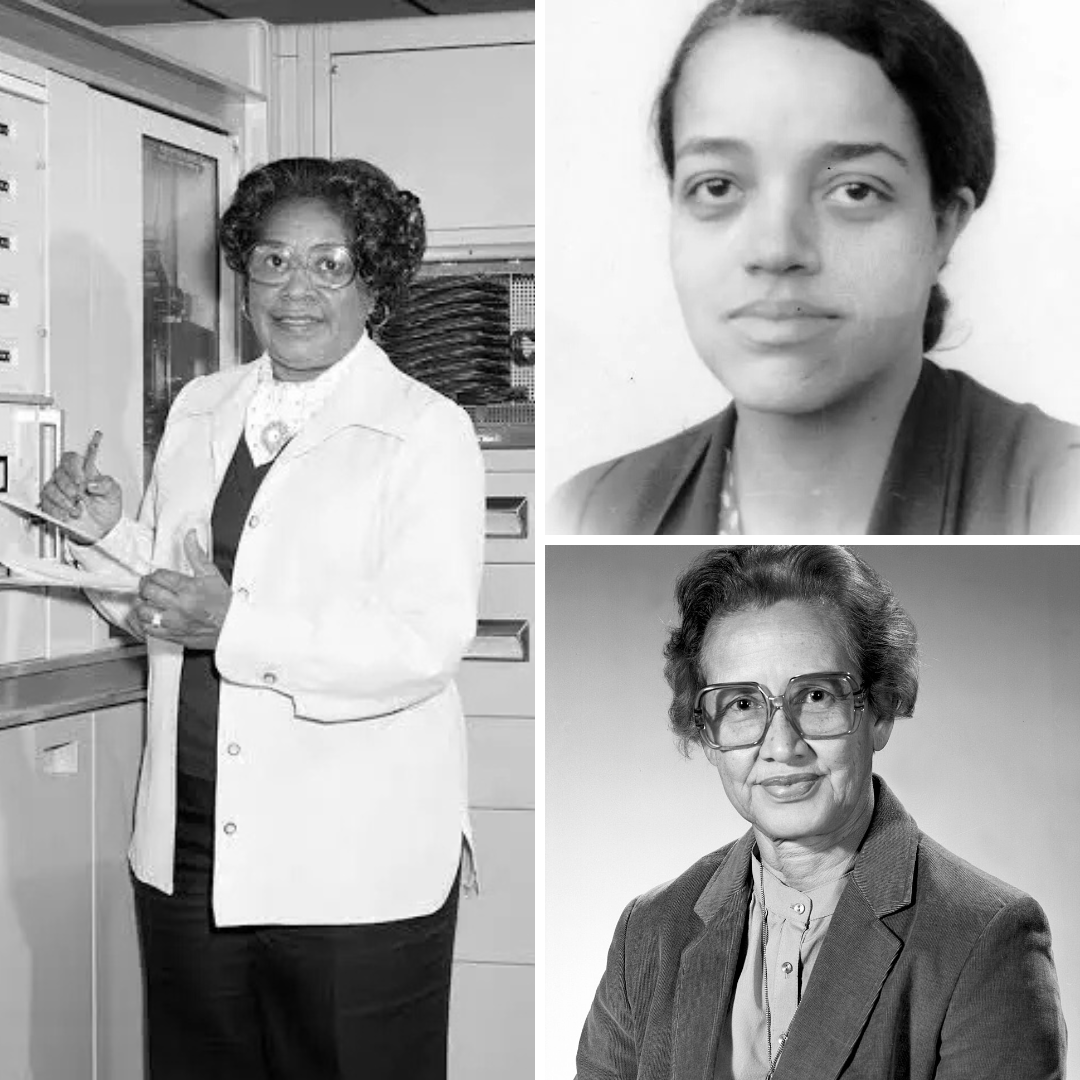
Far Left: Mary Jackson, Top Right: Dorothy Vaughan, Bottom Right: Katherine Johnson
Ed Dwight: The First Black Candidate To Take Part In The Aerospace Programme
In 1961, President John F. Kennedy personally backed Dwight's application to the Aerospace Research Pilot School, making him the first Black astronaut candidate in American history. He was qualified, a decorated Air Force test pilot with an aeronautical engineering degree, and yet he faced relentless resistance from within the programme itself, subjected to a hostility so sustained and institutional that it could not be mistaken for anything other than deliberate exclusion. When Kennedy was assassinated in 1963, whatever political will had been keeping that door ajar disappeared with him, and Dwight was passed over for the astronaut corps entirely. He resigned from the Air Force in 1966, never having flown in space. It would take another twelve years before an African American would make it to orbit. Dwight went on to become a celebrated sculptor, his works documenting Black history across the United States.
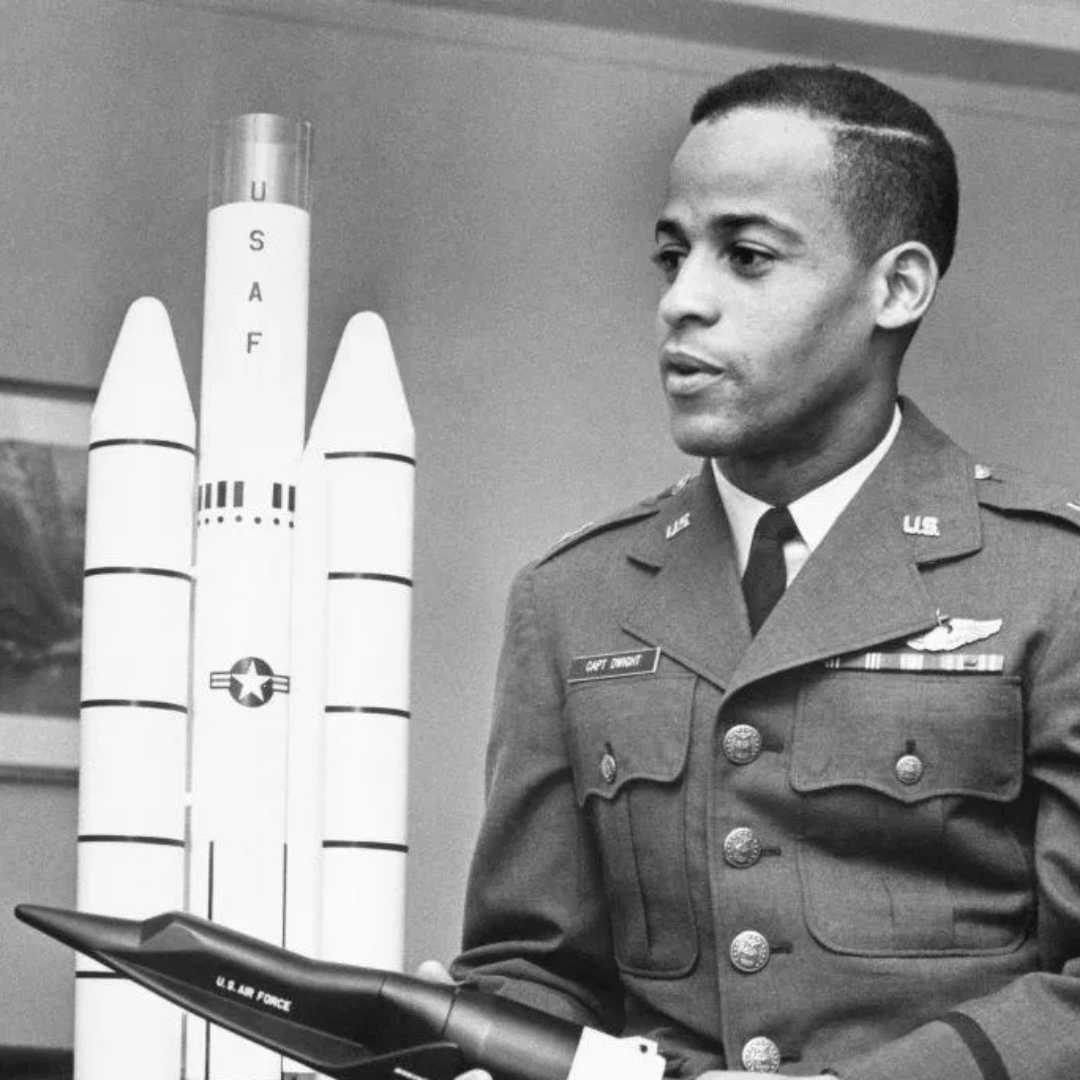
Ed Dwight
Guion "Guy" Bluford: The First Black American To Go To Space
On August 30, 1983, Guion "Guy" Bluford became the first African American to reach space, launching aboard the Space Shuttle Challenger on mission STS-8. It was a milestone that had taken twenty-two years to arrive since the founding of NASA's astronaut programme, and Bluford himself was characteristically understated about its weight. A decorated Vietnam veteran and aerospace engineer with a PhD, he was not a man given to grand proclamations.
Guy flew four shuttle missions in total, logging more than 688 hours in space, and his contributions spanned a range of scientific and defence-related experiments that had nothing symbolic about them; they were the work of a rigorous, technically exceptional astronaut who happened to be breaking a barrier at the same time. That tension is worth holding onto: Bluford did not go to space as a symbol, but history made him one regardless. What he represented to the generation of Black children who watched Challenger lift off that August night, that the cosmos was not, in fact, a whites-only frontier, was something no mission patch or technical report could fully capture. He had gone where Ed Dwight was prevented from going, and he carried that history with him into orbit whether he chose to or not.
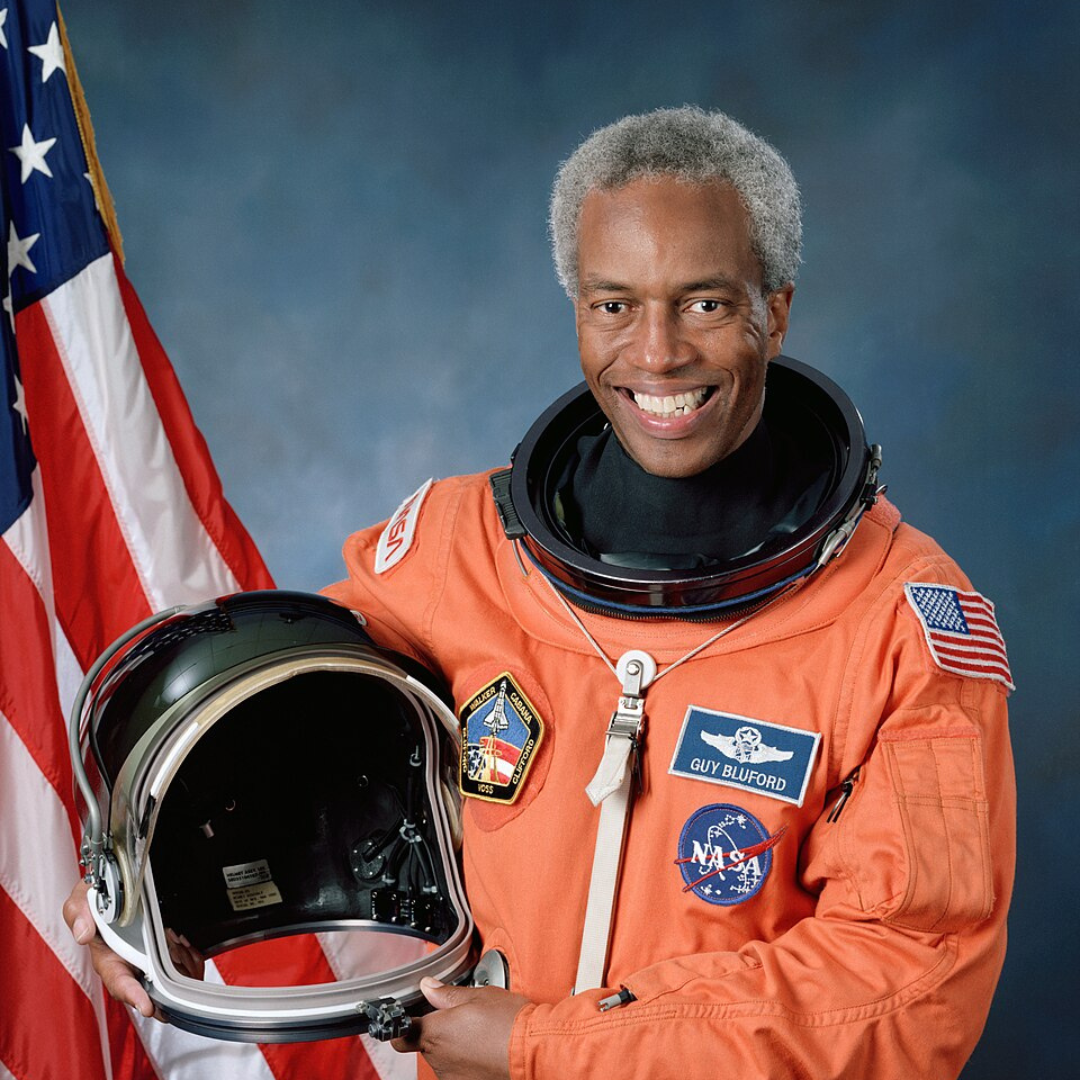
Guion "Guy" Bluford
Frederick D. Gregory: The First Black Person To Command A Spacecraft
Frederick D. Gregory arrived at NASA already forged by some of the most demanding flying the American military had to offer, a combat veteran of Vietnam and an experienced test pilot with over 550 aircraft types to his name. He flew three Space Shuttle missions, but it was STS-51B in 1985 that marked him out: he became the first African American to command a spacecraft, sitting in the left seat of Challenger as its pilot before later commanding Discovery and Atlantis.
Where Bluford's significance lay in being first to reach orbit, Gregory's lay in being trusted with ultimate responsibility for a mission and its crew. This distinction mattered enormously in an institution where authority and leadership had historically been the most tightly guarded preserves. He subsequently rose to become NASA's Deputy Administrator, the highest position any African American had held in the agency at that point, overseeing safety, mission assurance, and the difficult institutional reckoning that followed the Columbia disaster in 2003. Gregory's career traced an arc from cockpit to the upper reaches of leadership and power.
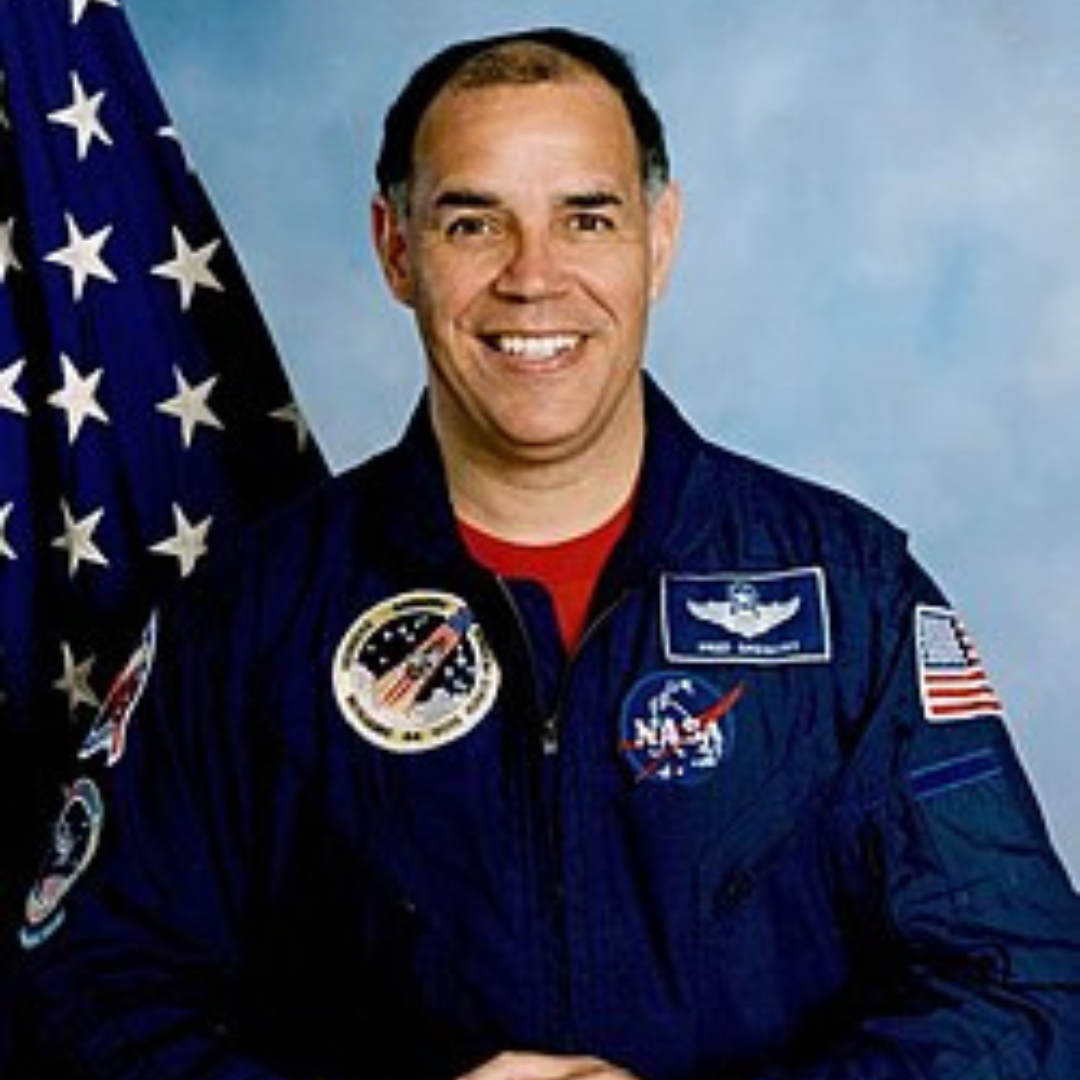
Frederick D. Gregory
Mae Jemison: The First Black Woman in Space
Dr. Mae Jemison made history in 1992 as the first Black woman to travel into space aboard the Space Shuttle Endeavour. A trailblazer in multiple fields, Jemison is a physician, engineer, and astronaut who has dedicated her life to science and education.
Jemison was born in 1956 in Decatur, Alabama, before moving to Chicago at age three with her family. She excelled academically, earning a scholarship to Stanford University and gaining degrees in chemical engineering and African-American studies. Her love for science and motivation to help people led her to Cornell University Medical College where she obtained a Doctorate in Medicine in 1981 at just 25, which gave her the credentials to serve as a Peace Corps medical officer.
She served in the Peace Corps for over two years in a number of countries that included Sierra Leone and Liberia, working seven days a week and being on call 24 hours a day as a medical officer, whilst also researching vaccines for diseases such as Hepatitis B. In watching Sally Ride become the first American woman to go to space in 1983, it culminated her love of the Universe and inspiring her to do the same. That opportunity came in 1987, when she joined the NASA astronaut programme, in itself a historical moment by being the first Black woman to do so. Jemison was just one of fifteen selected from over 2000 applicants.
Jemison was part of the STS-47 crew as mission specialist aboard the Space Shuttle Endeavour. On September 12, 1992, after rigorous training, Mae Jemison became the first African American woman in space, alongside six other astronauts. During her eight-day mission aboard Endeavour, Jemison conducted over forty experiments on life sciences and materials processing. She left NASA the following year and went on to establish The Jemison Group and The Dorothy Jemison Foundation for Excellence, promoting STEM education through initiatives like "The Earth We Share" science camps.
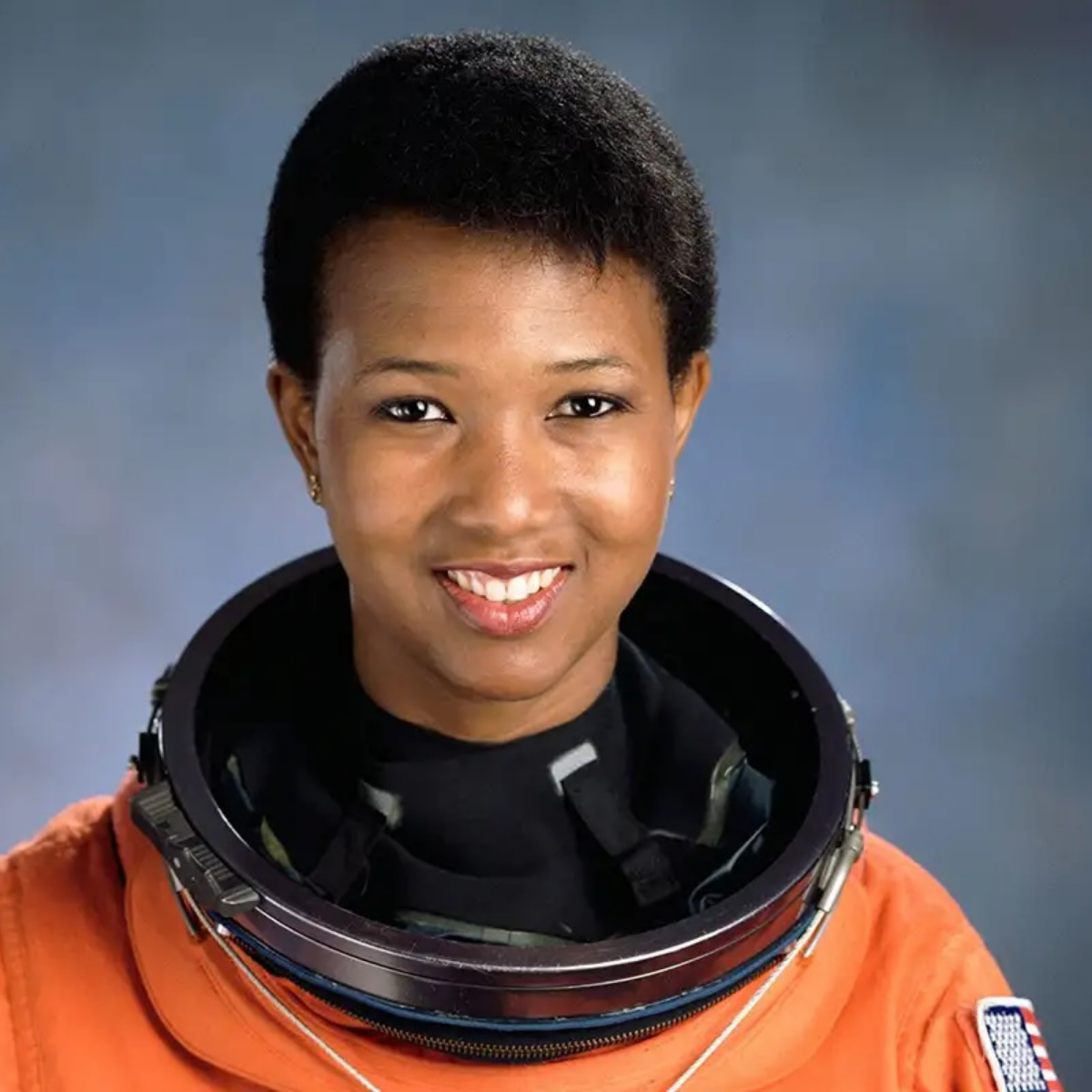
Mae Jemison
Victor Glover: The First Black Person To Orbit The Moon
On April 1, 2026, at 6:35 p.m. EDT, the Space Launch System rocket roared off Pad 39B at Kennedy Space Center, carrying four astronauts, and the weight of more than half a century of history, into the sky. Among them was Victor Jerome Glover Jr., a 49-year-old Navy Captain from Pomona, California, sitting in the pilot's seat of the Orion spacecraft on the Artemis II mission: humanity's first crewed journey toward the Moon in over 50 years. In doing so, Victor Glover made history as the first person of colour ever to travel beyond low Earth orbit.
Glover attended California Polytechnic State University in San Luis Obispo, wrestling, playing defensive back for the football team, and earning a degree in General Engineering in 1999. It was there that a chance encounter would change the trajectory of his life. A Black Naval Reserve officer visited campus, and something clicked. "That changed my life's direction," Glover later said.
He was commissioned as a Naval ensign, completed flight training in Pensacola, and earned his wings of gold in December 2001. He went on to fly the F/A-18 Hornet, Super Hornet, and EA-18G Growler, deployed in combat during Operation Iraqi Freedom aboard the USS John F. Kennedy, and was selected for the elite United States Air Force Test Pilot School, one of the most selective programs in military aviation.
By the time he applied to NASA in 2013, Glover had accumulated 3,000 flight hours in over 40 aircraft, more than 400 carrier arrested landings, and 24 combat missions. He held multiple master's degrees in flight test engineering, systems engineering, and military operational art. He had also served as a legislative fellow in the office of Senator John McCain.
NASA selected Glover as an astronaut in 2013, from a pool of over 6,400 applicants. In 2018, he was assigned as pilot for SpaceX's Crew-1, the first operational crewed mission of the Crew Dragon spacecraft. On November 15, 2020, he launched to the International Space Station aboard the capsule named Resilience, a name that felt personal. He became the first Black astronaut to serve a long-duration expedition on the ISS, spending 168 days in space, completing four spacewalks, and contributing to over 200 scientific investigations, covering everything from space botany to potential leukemia treatments. In February 2021, Vice President Kamala Harris called him on the station to mark the historic moment.
The Historic Impact of Artemis II
Then on April 3, 2023, NASA announced what many had hoped: Victor Glover would be the pilot of Artemis II. The Artemis II mission sends Commander Reid Wiseman, Pilot Victor Glover, Mission Specialist Christina Koch, and Canadian Space Agency astronaut Jeremy Hansen on an approximately 10-day journey, looping around the far side of the Moon and returning to Earth. Orion will travel approximately 4,700 miles beyond the far side of the Moon, reaching a maximum distance of 252,757 miles from Earth, farther than any human spacecraft since Apollo 17 in 1972, and breaking the distance record set by Apollo 13 in 1970.
This crew is historic in multiple dimensions. Victor Glover is the first person of colour to travel beyond low Earth orbit in human history. Christina Koch will be the first woman to journey around the Moon. Jeremy Hansen will be the first Canadian. Together, they represent a new chapter in who gets to explore, and who gets to be remembered. History is not just made in giant leaps. It is made in the quiet accumulation of courage, in a grandfather who served despite being grounded, in a fifth-grader who saw a rocket and dared to wonder. Victor Glover is all of those things. And right now, he is beyond Earth's orbit, for all of us.
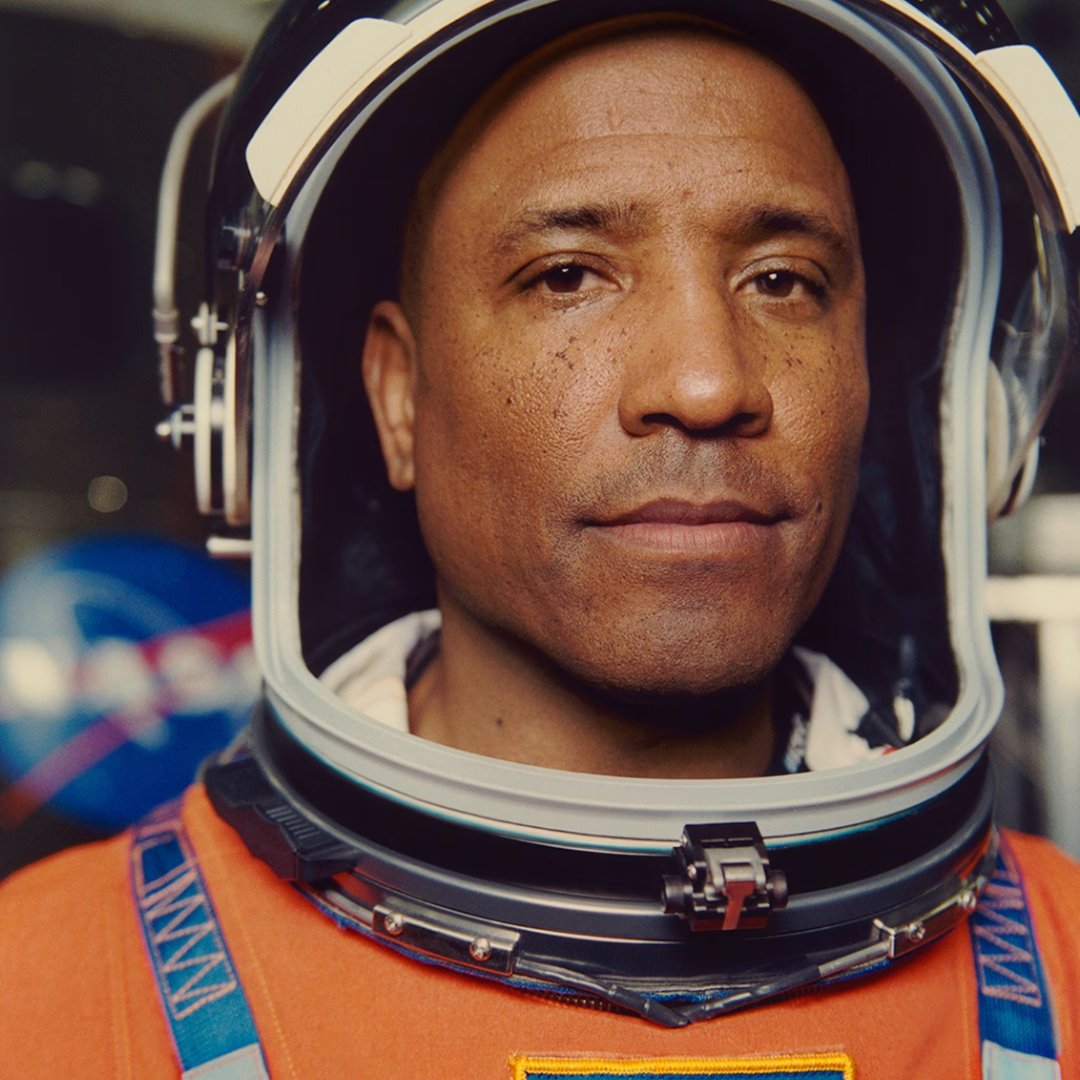
Victor Glover