10 Things to Know About Nigeria’s History
Nigeria is the most populated Black country in the world, with over 240 million people and over 17 million living abroad. No wonder Nigeria’s influence can be felt across the globe on every sensory level from food, fashion, music, film and language. And it has also produced some of the continent's most consequential business figures, including Aliko Dangote, Africa's richest man. Nigeria celebrates its independence on October 1st, here are 10 facts to know about its modern history.
1. The new Nigeria
Nigeria wasn’t a single place at all before the British. The Sokoto Caliphate, founded in 1804 by Usman dan Fodio, governed one of the largest states in nineteenth-century Africa, with its own courts, tax system and scholarly tradition centred on Islamic law. In the southwest, Yoruba city-states had run sophisticated systems of monarchy and council government for centuries. In the southeast, Igbo communities governed through village assemblies, age-grade societies and distributed authority.
In 1914, Sir Frederick John Lugard, the Governor General. amalgamated the Northern and Southern Protectorates with the Lagos Colony into a single territory. The land we know it as today. More than 250 ethnic groups and well over 400 languages were folded into one colonial hold.
2. A country named from afar
The country’s name itself came from an English lady in South London, never known to have stepped foot in the country. Her name, Flora Shaw, she would eventually be Lugard's wife. Shaw was the Colonial Editor for the Times and in an article written in 1897 suggested the name "Nigeria" to replace the long title it had at the time, Royal Niger Company Territories.
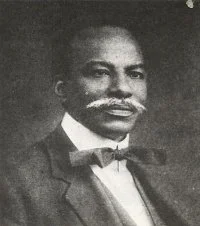
Herbert Macaulay
3. Nigerian nationalism
In 1923 Herbert Macaulay, grandson of the pioneering Anglican bishop Samuel Ajayi Crowther, founded the country's first political party, Nigerian National Democratic Party. He later bought the Lagos Daily News and used it as a direct weapon against the colonial administration. Macaulay is remembered as a father of Nigerian nationalism.
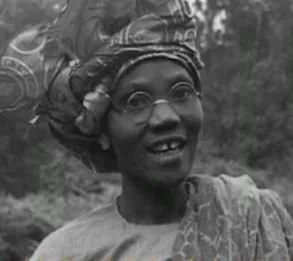
Funmilayo Ransome-Kuti
4. The woman’s movement
Funmilayo Ransome-Kuti, the mother of the iconic musician Fela Kuti, was the leader of the Abeokuta Women's Union. She mobilised thousands of women against unfair taxation and the political authority of the Alake of Abeokuta. Her campaign helped force the Alake to temporarily abdicate in 1949 and made her one of Nigeria's most prominent advocates for women's political rights.
5. Independence Day
1960 became known as the Year of Africa. Seventeen African countries gained independence that year, Nigeria being one. At midnight on 1 October 1960, Princess Alexandra of Kent handed over the instruments of independence in Lagos. Abubakar Tafawa Balewa, a former teacher before co-founding the Northern People's Congress (NPC) became Prime Minister. Nnamdi Azikiwe, who co-founded the National Council of Nigeria and the Cameroons (NCNC),took the ceremonial post of Governor-General. He became President when Nigeria declared itself a republic in 1963.
6. The Biafra War
By 1966, Nigeria had experienced two military coups. The second, in July, brought Yakubu Gowon to power. Organised pogroms of Igbo civilians in the north followed within months, killing thousands and sending an estimated one million refugees fleeing east. In May 1967, the Eastern Region declared itself the independent Republic of Biafra under Odumegwu Ojukwu. The Nigerian Civil War that followed, the Biafran War, lasted until January 1970 and killed an estimated two million people, most of them Biafran civilians starved by blockade.
7. Nigeria’s oil boom
In 1956 Nigeria’s modern history changed dramatically with the discovery of oil by the tank loads at Oloibiri in the Niger Delta. In the late 1960s, crude oil became the country’s dominant export and by the 1970s was in full boom, providing a major source of wealth for the economy as global oil prices surged.
The wealth transformed Nigeria’s economy, helping fund major infrastructure and urban development. The government poured revenue into highways, flyovers, ports, and new universities to modernise the country. But it also brought environmental damage, corruption and deep inequalities, particularly in oil-producing communities in the Niger Delta. The boom years are over but it still represents a significant amount to the country’s economy.
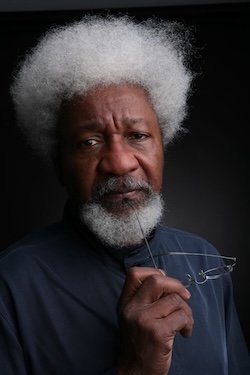
Wole Soyinka
8. Nobel Prize
In 1986, Wole Soyinka became the first African writer to win the Nobel Prize in Literature, and the first Black African to receive the award. The living icon, known for his trademark hair, was born in Abeokuta in 1934. The playwright, poet, novelist and political activist whose work has explored colonialism, power, corruption and Nigeria’s turbulent political history. He used his voice and his pen to challenge oppression. His writing, including Death and the King’s Horseman and The Man Died, established him as one of Africa’s most influential literary voices.
9. EndSars
In October 2020, thousands of young Nigerians took to the streets and social media in one of the country’s largest youth-led protest movements in recent history. The #EndSARS protests began as a campaign against the Special Anti-Robbery Squad (SARS), a police unit accused of extrajudicial killings, torture, harassment and other abuses. The movement quickly expanded into wider demands for police reform and better governance, spreading across Nigeria and into the diaspora.
The protests were met with a violent crackdown, most notably at Lekki Toll Gate in Lagos on 20 October 2020. Although SARS was formally dissolved, #EndSARS remains an important moment in Nigeria’s recent history and in the political expression of a younger generation.
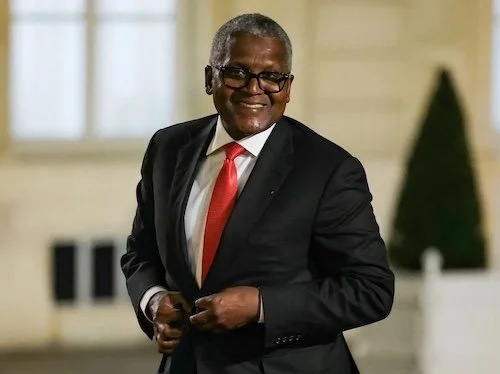
Aliko Dangote
10. Africa’s Richest Man
Aliko Dangote is Africa’s richest person and the founder of the Dangote Group, one of Africa’s largest conglomerates. His story, impressive as it is, isn't a rags to riches one. Dangote is the great-grandson of Alhassan Dantata a legendary trader, merchant, and the richest person in West Africa during his time, known for groundnut export and pioneering modern banking use in Kano.
Dangote started his business at the age of 20 after getting a loan from his grandfather. He started trading commodities before expanding into manufacturing, cement, sugar and other industries. His biggest project to date is the Dangote Refinery in Lagos, one of the world’s largest single-train oil refineries, which began operations in 2024.
On September 14th, officially launched the Initial Public Offering (IPO) of the Dangote Petroleum Refinery. It’s being called the "People's IPO" Designed to Democratise Wealth.