The History of Black Hair
In 1786, the Governor of Louisiana introduced the Tignon Law, which required free women of colour to cover their hair with head wraps, or “tignons”. The act was intended to subjugate free women of colour, especially those who were white passing so that they could not be told apart from enslaved women.
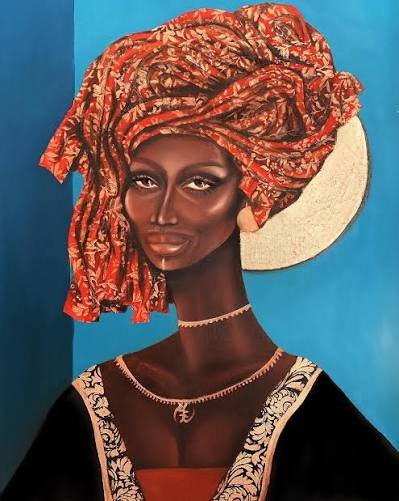
Tignon Law by Osaze Akil
However, Tignons soon became beautiful, colourful fashion accessories. Not for the first time, and definitely not for the last, hair became a symbol of beauty and resistance for Black people. Eventually, Tignons were even adopted by white women who could not help themselves from borrowing the style, something we are well used to seeing now.
Here is a history of Black hair, which shows just how long we have been trendsetting and innovating to wear our curls, coils, braids and blowouts with pride.
Early Modern Africa: Status and Symbolism
Across the continent of Africa, traditional hair styles are as diverse as the tribes. The OvaHimba people, who migrated between Northern Namibia and Angola between the 16th and 20th centuries, wear their hair in braids coated in their incredibly innovative Otijze paste. This red pigment, made from butterfat, acts as a UV protectant and cleanser, the natural, original version of the clay hair masks we see on the market today. Hairstyling amongst the OvaHimba is separated by gender, men wear one loc while women wear multiple. How they style them communicates their marital status, wealth and age.
In West Africa, the Kentenkye, later called the Dansinkran, is a short women's hairstyle which was worn by Akan royalty of the Asante empire. The style features a short round afro with black dye forming a sharp hairline. The Dansinkran was used to denote the status of female royalty, extending the hairstyle beyond practicality of a teeny weeny afro aka TWA to symbolism.
The Sunday Ritual
In 1807, the Act to prevent the Importation of Slaves was passed in America. It halted the flow of enslaved people, forcing enslavers to give them a day of rest. On this day, Sunday, enslaved people went to church, mended clothes, and did their hair. Cornrows, whose name first appeared in the diary of George Washington in the mid-1700s, were a style that would last through a week of work, redone every Sunday. The ritualistic use of the simple three strand braid was the first sign that Black hair was returning to the styling that had existed in Africa as far back as 3000 BCE.
Rastafarianism: A Return to Symbolism
In the 1930s, emerging from the teachings of Marcus Garvey, the Jamaican born religious movement Rastafarianism used locs as a way to break from British oppression. To wear one's hair in locs is to honour God, by keeping the hair as close to its natural form as possible. Hair for Rastafarians is an expression of spirituality. Whilst evidence of locs has been found in almost every ethnic group's history, dreadlocks belong to Black history.

Bob Marley and the Wailers
The origin of the name dreadlock stems from the Rastafaris ‘dread’ of God. It also comes from the demonisation of Rastafarians, the ‘dreaded people’ by the rest of Jamaican society. Up until recently, Rastafarianism has been an affront to Christianity in Jamaica and despite the popular interpretation of Jamaica as a Rastafarian society, dreadlock-wearers have long been marginalised. Similar origins for the term have been found in the Mau Mau uprising in Kenya, where British authorities thought that the Kenyan warriors' locs were ‘dreadful’. Whatever the origin, dreadlocks represent the use of Black hair as a representation of protest and spirituality.
The 1960s: Black is beautiful, Black is in business
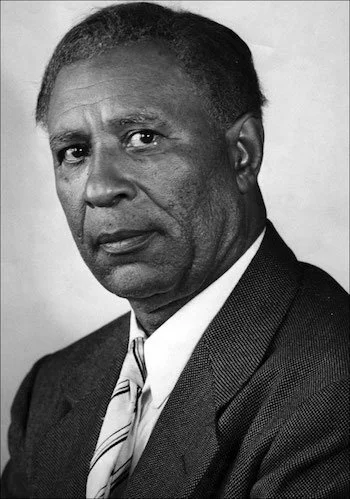
Garrett Morgan
Garrett Morgan, the son of two freed enslaved people from Kentucky, invented the chemical relaxer in 1910. Black hair trends at the time encouraged Black people to assimilate into white society and straighten their hair. This need for new products to achieve the look was a spark for innovation, beginning a trend of Black entrepreneurs who would transform the hair-care business.
Cut to 1962, and African American businessman and author Willie Morrow had created the Afro Pick, the first of which he whittled by hand in his barbershop. In 1975 he created the California Curl, the precursor to the Jehri Curl.
Whilst Morrow’s business boomed, the Civil Rights Movement was in full swing. The ‘Black is Beautiful’ movement was becoming more prevalent as models in fashion shows like ‘Naturally 62’ in Harlem embraced their natural look. The Black Panther Party, strayed from the Sunday-Best fashions of the Civil Rights crowds, wearing their ‘fros under revolutionary berets. Once again Black people were using their natural hair as a political statement.
Across the pond, in 1969, businessmen Dyke and Dryden created the largest Black beauty company in the UK, coinciding with both the development of more advanced chemical straightening techniques and the Black is Beautiful movement. A year later, the first luxury Black hair salon, Splinters, opened in Mayfair. Styling the iconic dreadlocks of Bob Marley and the legendary afro of Diana Ross.
Black Hair in the Digital Ages
Through the 80s, 90s, and early 2000s Black celebrities experimented with their hair, bringing traditional and non-traditional Black styles onto red carpets and music videos. Black hair became a feature in pop-culture with iconic fades and hightops, locs, afros, and hairstyles like braids even replicated outside of the Black community.
The birth of the internet only enhanced this, and by the 2010s Black hair icons like Issa Rae, were filling inspiration boards on Pinterest and ushering in a new wave of the natural hair movement. On YouTube, the ‘Big Chop’ trend peaked in 2016, it documented Black women cutting off their chemically relaxed hair to start afresh.
Even though Black hair was seen as beautiful and worthy of mainstream attention, it still needed defence against discrimination in professional settings. In 2016, in South Africa, Pretoria high school was accused of racism after banning afros in their uniform policy. Students protested this ruling, and an online petition amassed more than 30,000 signatures. In the United States in 2019, the C.R.O.W.N (Creating a Respectful and Open World for Natural hair) act was created by Dove and the Crown Coalition to prevent discrimination based on hair texture in work and schools.
Don’t Touch My Hair
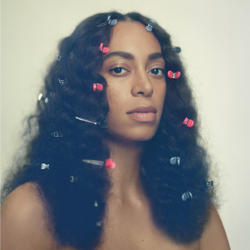
Solange Knowles
Solange Knowles, the singer behind ‘Don’t Touch My Hair’ said that ‘hair is incredibly spiritual, and, energetically, it really encompasses and expresses who we are.” At every point in history, hair has meant a great deal to identity, socio-political struggles and expressions of Black people. With each style and progression weaving together to create the wonderfully complex relationship Black people hold with their hair. This is beautifully depicted by the work of Artist Laetitia Ky, who is transforming her own hair into incredible sculptures inspired by traditional styles.
200 years after slavery was abolished in the United States, the Sunday ritual persists, in part because of its practicality (who has the time to do their hair before work everyday) but also for its meaning. Doing your hair is an acknowledgement of history, sometimes a form of resistance, and always an act of love and connection.