

James Baldwin, author of Giovanni’s room and if Beale Street Could Talk, didn’t think that ‘anybody in their right mind would want to be a writer’, and yet he is one of the most regarded authors of the 20th century. His award winning essays and activism revolutionised the Civil RIghts Era, and his first-of-their-kind novels, depicting openly gay characters made him an LGBTQ+ icon, and pioneer of the intersectional Black, gay experience in literature.
Baldwin: The Harlem Preacher
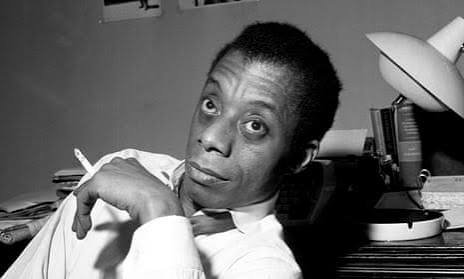
Following emancipation in the late 19th century, African Americans moved from the South to Northern and Midwestern cities in search of opportunity in a shift coined The Great Migration. 175,000 moved to Harlem, NYC. The movement brought a tide of artistic and scholarly influence to Harlem, including W. E. B. Du Bois, Marcus Garvey and Josephine Baker. Baldwin was born in 1924, in the middle of this cultural awakening, ready to influence and be influenced by the evolving African American identity.
At Fredrick Douglas Junior High School, where he attended until 1938, Baldwin’s first mentor was his French teacher Countee Cullen, a Harlem Renaissance Poet. Cullen’s influence set the stage for Baldwin’s later move to Europe but more importantly, as a young boy, it nurtured his talent and passion for the creative. However, it wasn’t Cullen who changed Baldwin from boy to writer. Instead, it was the time he spent as a preacher.
From age 14 to 17 Baldwin preached at the Fireside Pentecostal Assembly under the guidance of his strict, religious stepfather David Baldwin. From the pulpit, Baldwin developed his lyrical, jazz-like communication of both struggle and beauty to his audience. Unsurprisingly, he was popular, but he soon lost his faith and turned his talents elsewhere.
Baldwin in Paris
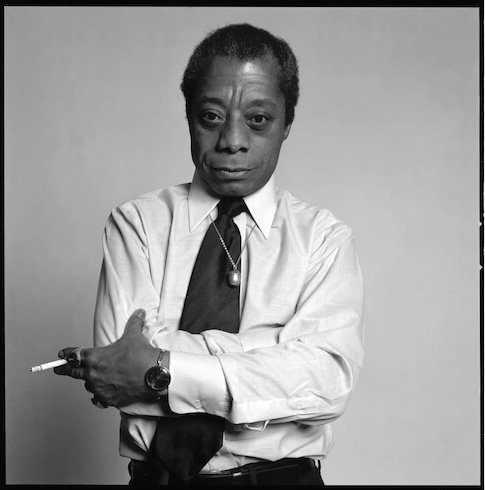
In 1943 Baldwin’s father died, just before Baldwin’s eighth and youngest sibling was born. He spent five years working menial jobs to help support his family during a very tense socio-political time in Harlem. All the while he grew bitter towards America, balancing his emerging creativity, and an increasing anger over his, and the Black communities, circumstance. He spoke candidly of his fear that he ‘was going to kill or be killed’ if he stayed. So in 1948, influenced by his new mentor, author Richard Wright, Baldwin escaped to Paris, where he would go on to create his most notable and celebrated work.
Many Black artists were finding reprieve from American racism in Paris at this time. Wright fled to Paris with his Jewish American Wife. Maya Angelou and Josephine Baker also sought refuge there, enjoying being seen as writers, dancers and poets before they were seen as Black. For Baldwin, Paris also afforded him the opportunity to explore his sexuality in a way Harlem never could. At first, he stayed in hotels on a small budget, picking up French whilst working and writing, but he would soon begin publishing.
Aged 24, Baldwin published The Harlem Ghetto, a piece about the socioeconomic conditions of his home. In 1949, he published the first of several relationship ending critiques of his now former mentor Wright over the matter of protest novels. Baldwin believed that the Black existence should not be reduced to caricatures of Black suffering, which he accused Wright of doing so. The pair almost came to blows in a Paris cafe, ending a friendship which was instrumental to Baldwin’s early success.
Wright had helped secure the $500 fellowship which would allow Baldwin to write his first novel. In a Swiss chalet belonging to his long term lover Lucien Happersberger Baldwin finished Go Tell it on a Mountain. The semi-autobiographical novel had religious overtones that call back to his time as a preacher and the pressure he felt as the eldest son. Baldwin was one of the lucky few who experienced the success of his art during his life, and in 1954 he received a Guggenheim Fellowship. This award allowed him to write his first collection of essays, Notes of a Native Son, the name of which took inspiration from Wright’s bestselling novel Native Son.
Baldwin lived his life as a self described ‘transatlantic commuter’, in London and New York he kept close contact with his siblings, visiting them and living for periods in his New York residence. Between Paris, Switzerland, Istanbul and beyond he maintained complex relationships with lovers and friends. It was whilst he navigated these dynamics that he wrote Giovanni’s Room. The novel, which has adopted incredible significance with modern audiences, was rejected by Baldwin’s Publisher Knopf. They did not like that the main character was a bisexual man. Luckily, Dial Press didn’t share these reservations, allowing Baldwin to become the pioneer of gay literature that he is today.
The Civil Rights Era
In the late 1950s the struggles of the Civil Rights movement called Baldwin home. The uncompromising Malcolm X claimed Baldwin was too volatile to talk at rallies, ‘he was liable to say anything’, but that did not deter Baldwin from frequently attending marches. He was at the Selma to Montgomery march, and the March on Washington. His return to the United States inspired The Fire Next Time, an essay in the form of a letter to his teenage nephew and an examination on race and religion.
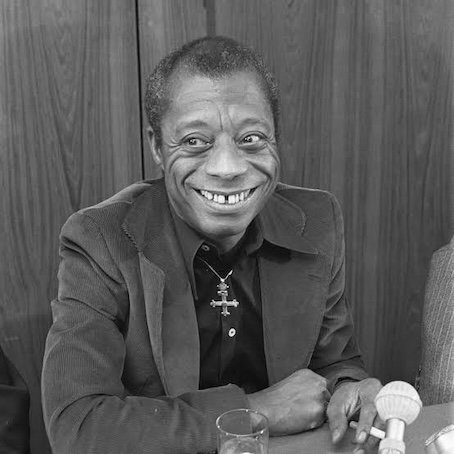
Despite the significant progressions of the Civil Rights movement, Baldwin had become disillusioned. Three of his friends and fellow activists, Martin Luther King, Malcolm X, and Medgar Evers had been assassinated by 1968. And although his talk with Attorney General Robert F Kennedy in 1963 had soured due to Baldwin’s ‘radicalism’, by the end of the decade he had been ostracised for his pacifist views. Black Panther Eldrige Cleaver made a homophobic attack against Baldwin in his prison memoir Soul on Ice.
This public rejection also didn’t end his involvement in the Civil Rights Movement. Baldwin continued to write novels and essays on the matter, including in defence of Angela Davis. But Baldwin was suffering mentally, and once again escaping from homophobia and racism led him back to France.
The Legacy of the Man & His Creativity
In the wake of such devastating losses Baldwin went to an (at first unwelcoming but soon accepting) village in the South of France to recover. In 1979 he published Just Above My Head which brought together race, sexuality and religion for his last novel. Baldwin’s final years were spent lecturing at American Universities, and in 1986 he received a Legion of Honour, a French Civil Award akin to Knighthood.
Baldwin died aged 63 of stomach cancer, he was buried in New York at a large service which boasted a crowd of artistic titans who had coloured his life. His works have been adapted into films and his life has been made the subject of documentaries and exhibitions. Yet, his writing remains relevant without re-interpretation. Baldwin believed that shame is what made finishing his first novel so difficult. His legacy continues to unpick at the remnants of the shame which still exist for the Black and LGBTQ+ communities, making room for more hope and joy and creative expression.