10 of the Greatest African Kingdoms in History
Africa’s history is built on the majestic kingdoms and empires that shaped cultures, politics, and commerce across centuries and the globe. These states were home to visionary leaders and innovators whose legacies transcend time. From Mali to Ethiopia, we take a historic whistle-stop trip to some of the greatest kingdoms to ever exist.
Mali Empire
No discussion of African empires is complete without the Mali Empire. Founded by the legendary Sundiata Keita in the 13th century, Mali grew into a prosperous realm controlling vast gold and salt trade routes. Mansa Musa’s reign epitomised the empire’s zenith; his pilgrimage to Mecca famously displayed Mali’s immense wealth, with gold gifts impacting economies as far as Cairo. Musa also promoted Islamic scholarship and architecture, establishing the University of Sankore in Timbuktu as a global centre of learning.
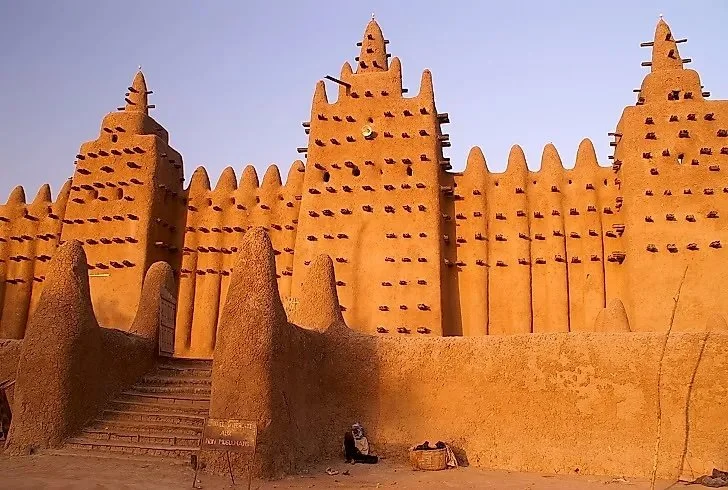
An ancient mosque part of the famous group of Muslim learning centers collectively known as the Universities of Timbuktu.
Ancient Egypt
Ancient Egypt’s civilisation, lasting over 3,000 years, remains one of humanity’s earliest achievements. It was an epicentre of philosophy, science, and monumental art, from the Great Pyramids of Giza to complex hieroglyphic writings. Pharaoh Ramses II, known as Ramses the Great, was a warrior and builder who expanded Egypt’s borders and commissioned many temples. The Egyptians perfected irrigation systems for the Nile, enabling advanced agriculture and urban centers. Their religious and cultural innovations deeply influenced cultures far beyond Africa.
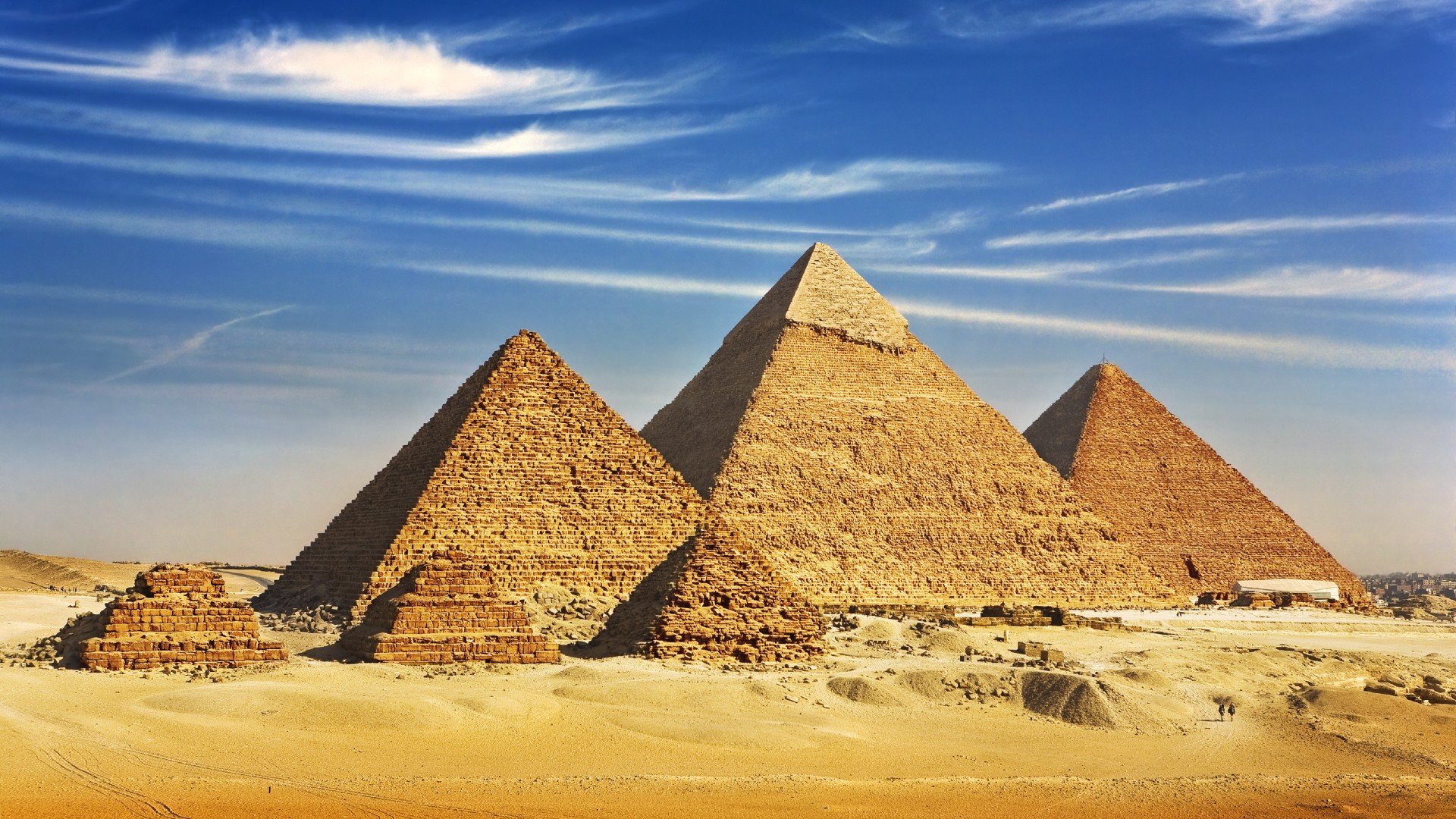
Queens' Pyramids, left to right: the Pyramid of Menkaure, Khafre and then Khufu.
Kingdom of Kush
The Kingdom of Kush, flourishing in modern Sudan, was a powerful neighbor and sometimes conqueror of Egypt, marked by its distinct pyramids at Meroë and iron production expertise. Queen Amanirenas is famed for leading Kushite resistance against Roman Egypt, wielding both military skill and diplomatic acumen. Kushite culture blended Egyptian, African, and indigenous elements, leaving traces in art, language, and statecraft that highlight a resilient kingdom thriving along the Nile.
Kingdom of Aksum
Aksum’s strategic location near the Red Sea turned it into a flourishing trading empire from the 1st to the 10th centuries CE. King Ezana’s reign marked a historic shift when Aksum converted to Christianity, becoming one of the earliest Christian states globally. The giant stelae monuments and Aksumite coinage illustrate its technological and economic sophistication. Aksum was a cultural bridge connecting Africa to Arabia and the Mediterranean, foundational to Ethiopia’s historical identity.
Songhai Empire
The Songhai Empire expanded upon the foundations laid by Mali, turning into the largest empire in West African history. Sunni Ali was a tactical military leader who consolidated power through riverine control and skilled warfare. His successor, Askia Muhammad, propelled Songhai to the heights of governance and scholarship, reinforcing Islamic institutions and trade networks. Cities like Gao and Timbuktu became shining centers of culture, law, and commerce, emblematic of Songhai’s golden age.
Kingdom of Benin
Not to be confused with the modern country, the Benin Kingdom in Nigeria is renowned for its exquisite bronze sculptures and advanced political system. Oba Ewuare the Great transformed Benin City into a walled masterpiece and expanded the kingdom’s influence. These bronzes are invaluable cultural artifacts, depicting rulers and scenes that chronicle Benin’s rich history. The kingdom was an early participant in European trade, influencing Atlantic dynamics while preserving its sovereignty.
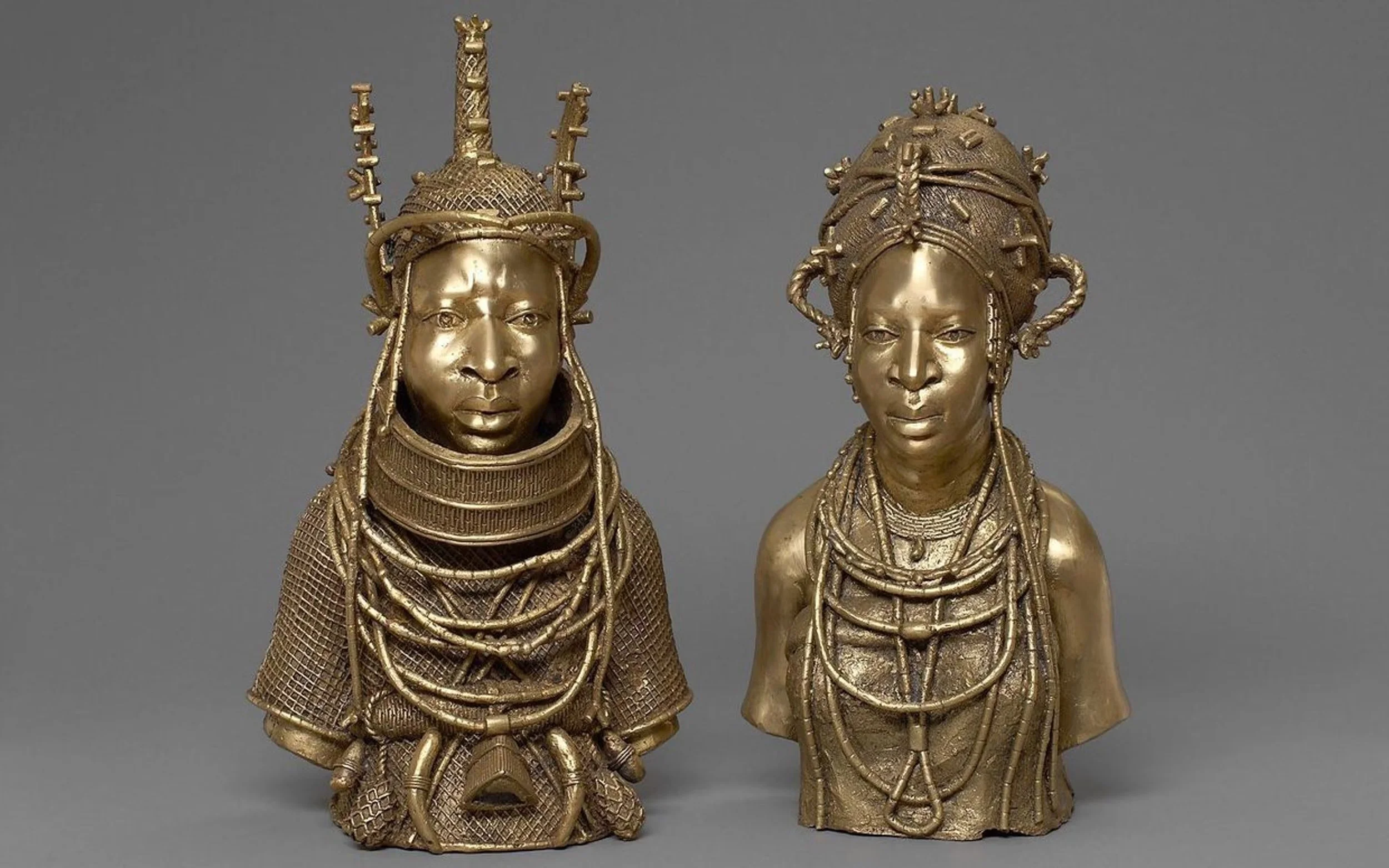
Pair of Busts: King (Oba) and Queen, 2006. Edo, Nigeria. Brass. Weltmuseum Wien, Vienna (184.376 a, b)
Great Zimbabwe
Between the 11th and 15th centuries, Great Zimbabwe was a powerful city-state whose massive dry-stone architecture confounds historians even today. Constructed without mortar, the ruins speak to an advanced understanding of engineering. Great Zimbabwe controlled trade routes for gold and ivory extending to the Indian Ocean coast, linking interior Africa with global commerce.
Zulu Kingdom
The Zulu Kingdom epitomizes might and military innovation in Southern Africa. Shaka Zulu revolutionized warfare with his short stabbing spear and disciplined regiments, uniting clans into a powerful nation. His reforms extended beyond tactics, shaping social structures and expanding the territory rapidly. Despite his reign’s brutality, Shaka is still one of the most renowned figures in African history.
Kingdom of Kongo
The Kingdom of Kongo flourished in Central Africa through sharp political alliances and trade, including one of Africa’s earliest contacts with Portugal. Nzinga a Nkuwu converted to Christianity, establishing diplomatic links with Europe that shaped cultural exchanges. The kingdom’s art, governance, and societal organisation highlight a sophisticated polity that thrived until the devastating disruptions of the transatlantic slave trade.
Ashanti Empire
The Ashanti Empire rose from uniting Akan-speaking peoples under Osei Tutu, whose spiritual and political leadership was symbolised by the Golden Stool, and created a centralised and powerful kingdom. The Ashanti controlled extensive gold resources and developed formidable armies resisting European colonisation. Their political model influenced many West African societies, and the Ashanti culture remains vibrant and influential.