Black Women Who Claimed a First in British Broadcasting
Evelyn Mary Dove, Una Marson, and Barbara Blake Hannah's lives overlap across the 20th century, each woman advancing Black British presence in culture and intellect through their work in mainstream broadcast. Their moments, arrivals, firsts, breakthroughs opened doors, crossed thresholds and were so impactful they eventually changed the structures set up against them.
Evelyn Mary Dove (1902–1987)
Born in London to a Sierra Leonean father, who was a barrister and an English mother, Dove trained as a contralto singer and pianist at the Royal Academy of Music at a time when Black performers were systematically excluded from elite musical and theatrical spaces. However, she fell in love with Jazz and cabaret, where she found decades of success.
Her career took her across Britain and Europe and was often compared to Josephine Baker and Vera Lynn. Her first historic moment came in 1925, when she became the first Black woman to be broadcast on the BBC, just three years after its launch.
It was in 1939 that her career really took off, when invited back to the BBC as a vocalist. She had so much appeal, the BBC employed her for a decade, featuring on programmes such as Rhapsody in Black, Calling the West Indies, Variety Bandbox, Music For You, Caribbean Carnival, and Mississippi Nights. The series Serenade in Sepia (1945–47), was her biggest success attracting so many listeners that the BBC decided to make a television version called Variety in Sepia. The show was a showcase of Black talent filmed live at Alexandra Palace, London.
After World War II, and now a celebrated figure, she headlined cabaret in Paris, India and Spain. In the 1950s she took on West End Shows and scripted TV. Evelyn was one of the first Black British stars in entertainment, never mind even being a Black woman. She stepped onto the scene in 1925 and broke down barriers for many more to come long after her last performance in the 1960s.
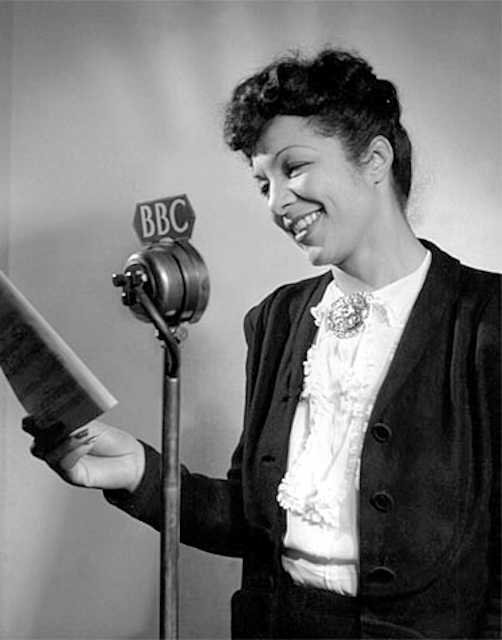
Evelyn Mary Dove
Una Marson (1905–1965)
Born in Jamaica in 1905, Una Marson was already a published poet, editor, playwright and feminist activist before she set foot in Britain in the 1930s. What she encountered was a society with a prevailing colour bar preventing work for Black people and a society that resisted Black voices.
Una lived in Peckham, housed by Harold Moody, who established the League of Coloured Peoples. The league sponsored the production of her successful play At What a Price, which tackled themes such as sexual harassment, love ambition and prejudice in Jamaica. The play ran in London on multiple stages from 1932-33.
Una would use her writing talents to confront racism, sexism, loneliness, and colonial hypocrisy head-on. Long before “intersectionality” entered academic language, Marson articulated the double marginalisation of being both Black and female in a white, imperial society. Her poem "Nigger" published in the League of Coloured Peoples' journal, The Keys, chronicles her own visceral experience to racism on the streets of the “motherland”.
Her most significant moment came during World War II, where she became the first Black woman to be employed at the BBC in 1941. As a producer and presenter, Marson created Caribbean Voices, a programme that introduced writers across the Caribbean diaspora, including figures who would later be canonised, to British and global audiences.
Marson understood that control of narrative was power. By insisting that Black people speak for themselves, in their own accents, idioms, and intellectual traditions, she cracked open a public sphere that had excluded them.
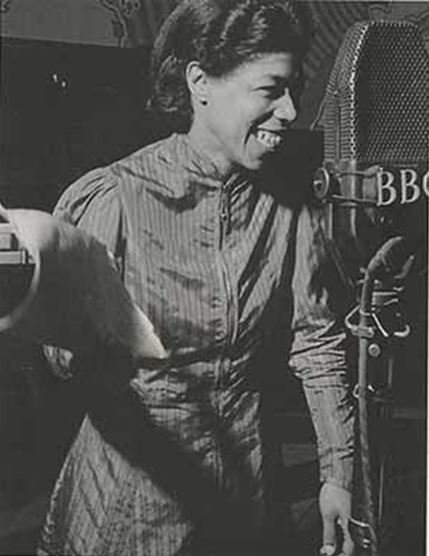
Una Marson
Barbara Blake-Hannah (1939– Present)
Born in Jamaica in 1939, Barbara trained and worked as a journalist before moving to Britain in 1964. She took on work as a writer for a number of publications, including The Caribbean Times and The Sunday Times.
In 1968, she became Britain’s first Black woman on-camera TV reporter, reporting for the Thames TV daily evening news magazine show Today with Eamonn Andrews. She covered a wide range of stories, including news, interviews with notable figures like Harold Wilson and Michael Caine, and features on London life.
Barbara's presence on TV rattled white audiences who felt she had no place reporting the news or having such proximity to people of power and influence. After 9 months, the broadcaster eventually succumbed to the racist pressures and dismissed her without formal explanation.
She left Britain in the early 1970s, relocating to the United States and later returning to Jamaica. There, she continued her work as a journalist, writer, and cultural commentator, refusing to abandon the profession. Her memoir, Growing Up Black (1989), reflects on race, media, and belonging across Britain, the Caribbean, and the United States. It stands as both personal testimony and institutional critique, documenting what it meant to be “first,” and how quickly institutions move on without changing themselves.
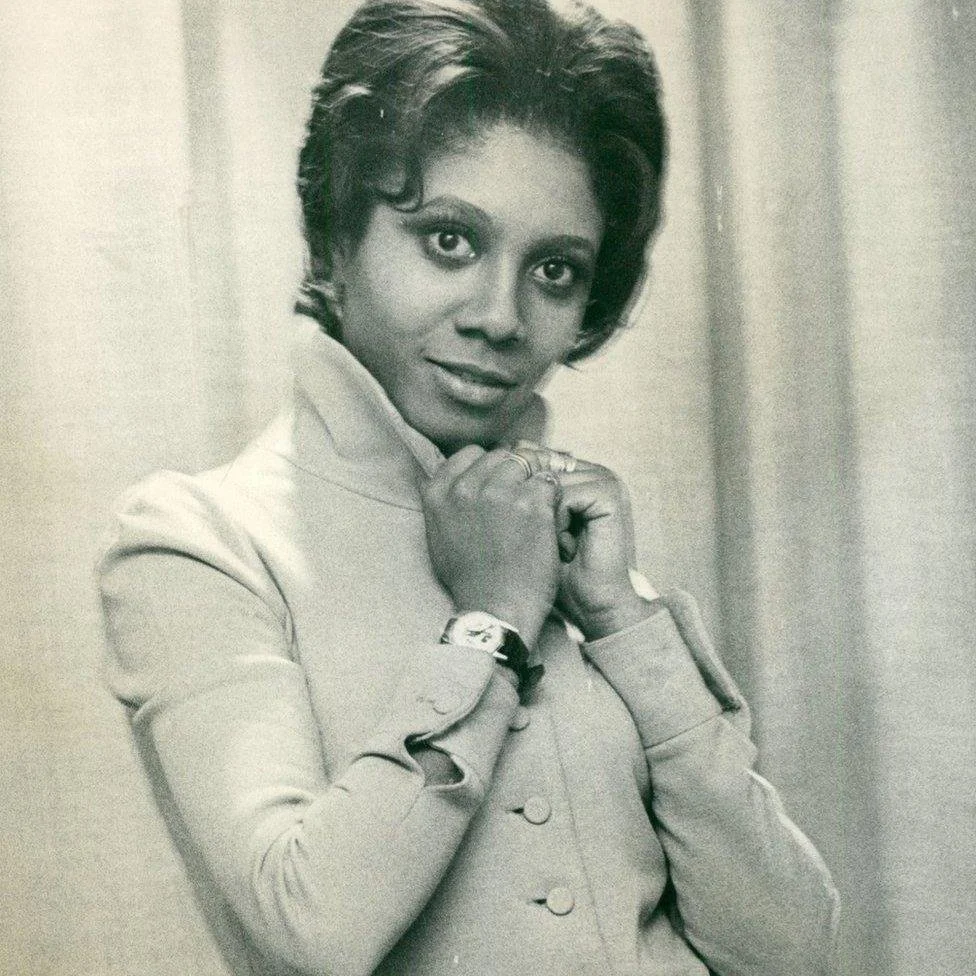
Barbara Blake-Hannah