10 African Kingdoms In History
Which ancient African empire was so wealthy it crashed the global gold market? Which kingdom repelled the might of Rome with a one-eyed warrior queen? Africa's history is built on magnificent kingdoms and empires that shaped cultures, politics, and commerce across centuries, yet they remain among the most underappreciated civilisations in world history.
From the gold-laden Mali Empire to the engineering marvel of Great Zimbabwe, these ancient African states were home to visionary leaders, groundbreaking scholars, and military innovators whose legacies still resonate today. Whether you're a student, a history enthusiast, or simply curious about the ancient world, this guide explores 10 of the greatest African kingdoms ever to exist — covering their rise to power, key rulers, trade networks, and enduring cultural impact.
1.Mali Empire
Origins and Rise to Power: The Mali Empire was founded by the legendary warrior-king Sundiata Keita following his victory at the Battle of Kirina in 1235 CE. Sundiata united the Mandinka people and overthrew the Sosso Kingdom, establishing a realm that would grow into one of the largest and wealthiest empires in the medieval world. Located in West Africa across what is now Mali, Senegal, Guinea, and beyond, the empire capitalised on its control of vital trans-Saharan trade routes.
Mansa Musa: The Richest Person in History: No figure better embodies Mali's staggering wealth than Mansa Musa, who ruled from around 1312 to 1337 CE. His 1324 pilgrimage to Mecca is one of history's most remarkable events — he travelled with a caravan of over 60,000 people and distributed so much gold along the way that he triggered inflation in Egypt and the Arabian Peninsula that lasted more than a decade. Some historians estimate Mansa Musa's personal wealth, adjusted for today's values, would make him the richest individual who ever lived. Check out more about Mansa Musa and other remarkable rulers in our article: 10 African Kings in History
Scholarship, Architecture, and Legacy: Musa's reign transformed Timbuktu into a global centre of Islamic scholarship. He commissioned the construction of the Djinguereber Mosque and established the University of Sankore, which at its peak attracted scholars from across the Islamic world and housed hundreds of thousands of manuscripts. The Mali Empire's influence on West African language, culture, and governance endures to this day.
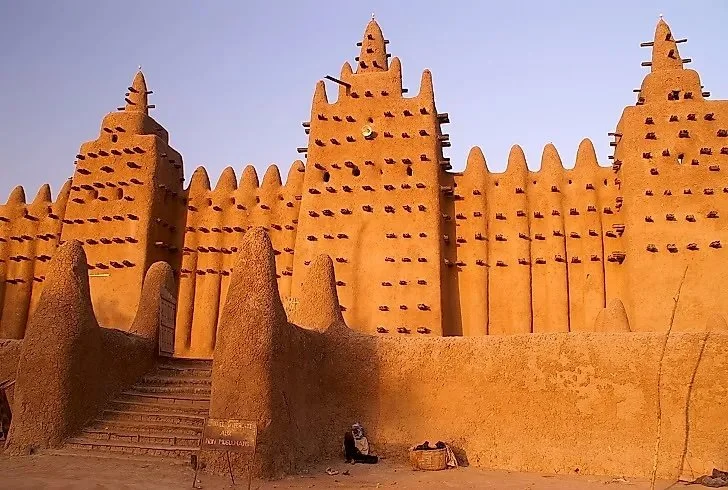
An ancient mosque part of the famous group of Muslim learning centers collectively known as the Universities of Timbuktu.
2. Ancient Egypt (c. 3100–30 BCE)
The World's Longest-Lasting Civilisation: Few civilisations in human history can match Ancient Egypt for longevity, achievement, or cultural impact. Spanning more than 3,000 years, Egypt was one of humanity's earliest and most sophisticated states, developing writing, mathematics, medicine, and monumental architecture at a time when much of the world had yet to form organised societies. From the unification of Upper and Lower Egypt around 3100 BCE to its eventual absorption into the Roman Empire in 30 BCE, Egypt remained a dominant force in the ancient world.
Pharaohs, Pyramids, and Innovation: The Great Pyramids of Giza, built during the Old Kingdom period, remain among the most extraordinary engineering achievements in history. Pharaoh Ramses II — known as Ramses the Great — ruled for over 60 years during the 13th century BCE, expanding Egypt's borders through military conquest and commissioning temples and monuments on an unprecedented scale, including the famous Abu Simbel. Egyptian innovations in irrigation transformed the Nile Valley into one of the ancient world's most productive agricultural regions, supporting a population and urban culture unmatched at the time.
Cultural Influence Across the Ancient World: Egypt's religious beliefs, artistic conventions, and philosophical traditions spread far beyond its borders, influencing ancient Greece, Rome, and cultures across the Near East. Hieroglyphic writing, the concept of the afterlife, and iconic symbols such as the Eye of Horus became embedded in the cultural DNA of civilisations that followed.
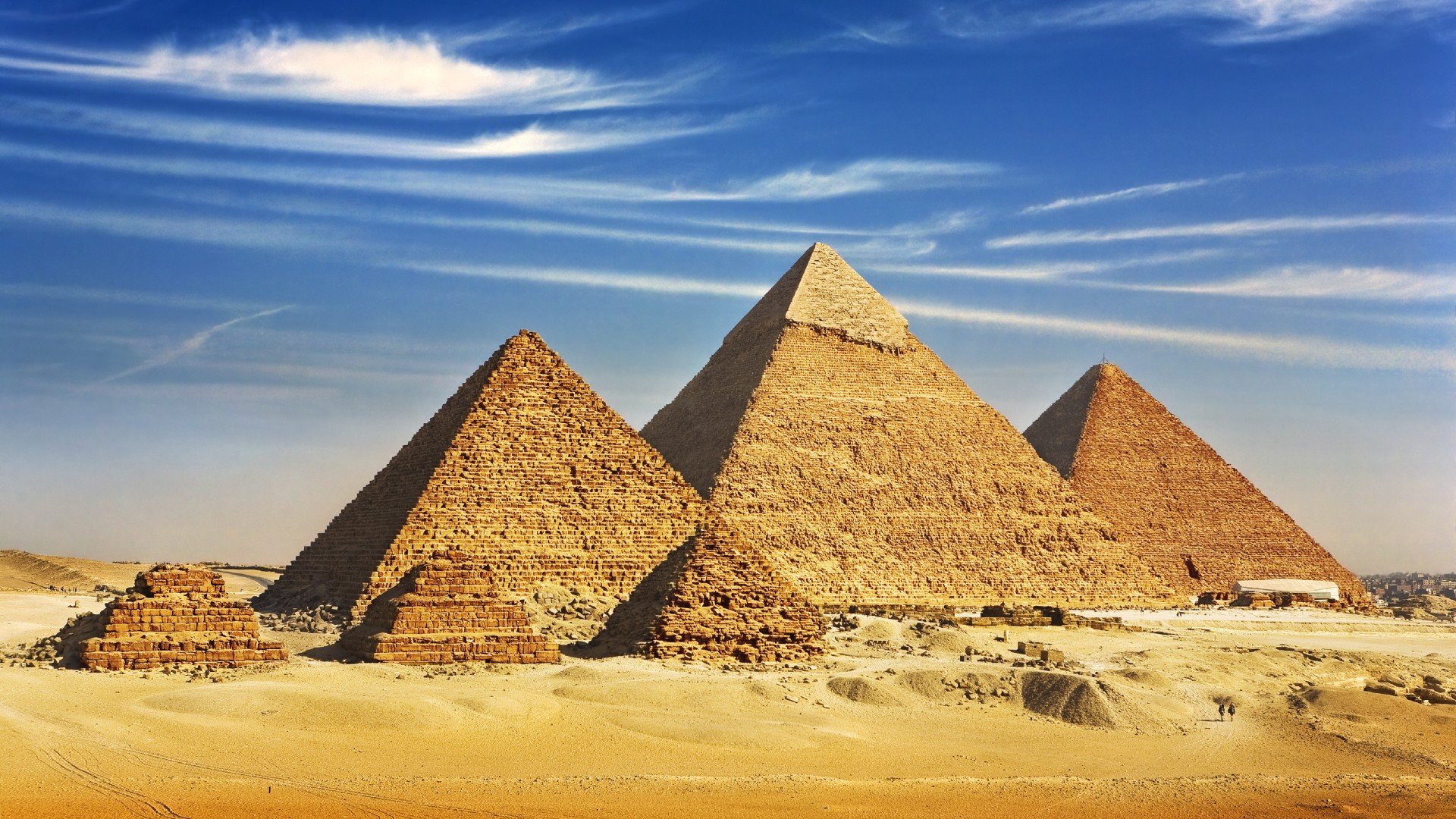
Queens' Pyramids, left to right: the Pyramid of Menkaure, Khafre and then Khufu.
3.Kingdom of Kush (c. 1070 BCE–350 CE)
Egypt's Powerful Neighbour: The Kingdom of Kush, located along the Nile in what is now Sudan, was far more than a neighbour to Ancient Egypt — it was, at various points, its rival, conqueror, and cultural heir. Kush reached the height of its power during the 25th Dynasty (c. 747–656 BCE), when Kushite pharaohs ruled all of Egypt, forming what historians call the Nubian Dynasty. The kingdom's iconic pyramids at Meroë — sharper and more numerous than their Egyptian counterparts — remain one of Africa's most striking archaeological sites.
Queen Amanirenas and the Defence Against Rome: One of Kush's most celebrated rulers was Queen Amanirenas, who led Kushite forces against Roman Egypt around 25 BCE after Rome attempted to impose heavy taxes on the kingdom. She launched successful raids deep into Roman held territory, reportedly decapitating a statue of Emperor Augustus and displaying the severed bronze head beneath the steps of a temple as a symbol of defiance. Her diplomatic and military skill ultimately won Kush a favourable peace treaty with Rome, a remarkable achievement for any kingdom of that era. Her diplomatic and military skill ultimately won Kush a favourable peace treaty with Rome, a remarkable achievement for any kingdom of that era. Discover more fearless female rulers in our 10 African Queens in History.
Iron Production and Cultural Synthesis: Kush was one of Africa's earliest centres of iron production, with the city of Meroë acting as a major hub of iron smelting. Kushite culture represents a compelling synthesis of Egyptian, African, and indigenous Nubian traditions, visible in its art, language, and religious practices.
4.The Kingdom of Aksum (c. 1st–10th Century CE)
The Red Sea Trading Empire: The Kingdom of Aksum, based in what is now northern Ethiopia and Eritrea, was one of the ancient world's great trading powers. Its strategic location near the Red Sea placed it at the crossroads of commerce between the Roman Empire, Arabia, India, and sub-Saharan Africa. By the 3rd and 4th centuries CE, Aksum was considered one of the four greatest powers in the world alongside Rome, Persia, and China, according to the Persian prophet Mani.
Christianity and King Ezana: Aksum holds the distinction of being one of the world's first officially Christian states. King Ezana converted to Christianity in the 4th century CE, making it a state religion, predating Rome's own official adoption of Christianity. This foundational moment is directly tied to Ethiopia's modern identity as one of the world's oldest Christian nations and the home of the Ethiopian Orthodox Church.
Obelisks, Coinage, and Technology: Aksum's towering stone stelae, some standing over 20 metres tall, are remarkable feats of ancient engineering and remain standing in the city of Aksum today. The kingdom also minted its own gold, silver, and bronze coins, a mark of significant economic and political sophistication. Aksumite coinage is among the earliest in Sub-Saharan Africa.
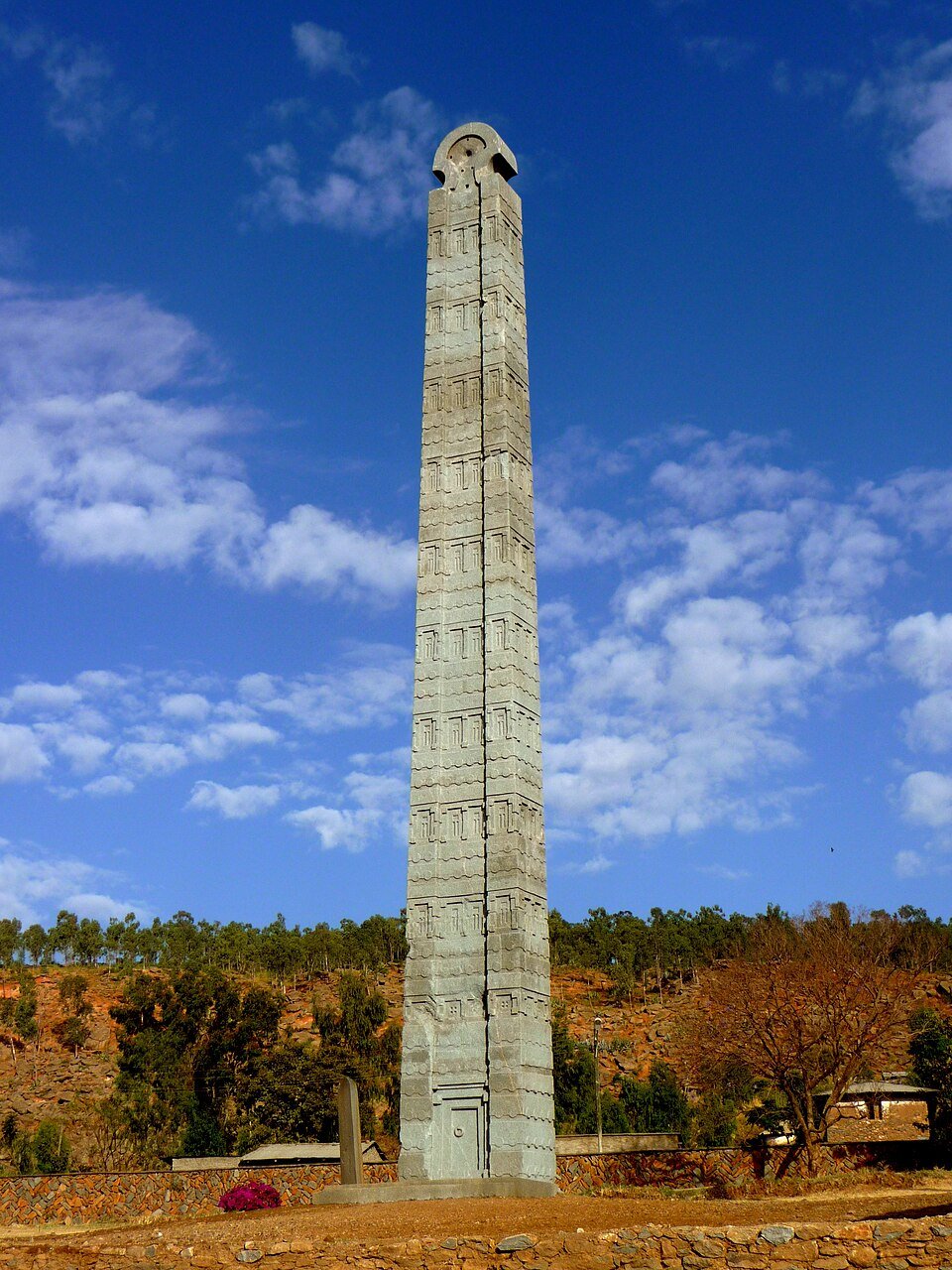
Obelisk of Axum
5.Songhai Empire (c. 1375–1591 CE)
The Largest Empire in West African History: The Songhai Empire succeeded the Mali Empire to become the largest empire in West African history, stretching from the Atlantic coast to what is now central Niger. At its peak in the late 15th and early 16th centuries, it encompassed a vast and diverse population connected by the Niger River's trade networks and an efficient administrative system.
Sunni Ali: Military Architect of an Empire: Sunni Ali, who ruled from 1464 to 1492, was the military genius who built Songhai into a regional superpower. He pioneered the use of river based warfare, deploying a powerful naval fleet along the Niger to capture key cities including Timbuktu (1468) and Djenné (1473). His relentless campaign style reportedly led his army in person for 28 consecutive years, unified territories that had previously been fragmented.
Askia Muhammad and the Golden Age of Governance: Under Askia Muhammad (r. 1493–1528), Songhai entered its golden age. He reformed the empire's administration, standardised weights and measures to improve trade, and strengthened Islamic institutions and scholarship. Cities like Gao and Timbuktu flourished as international centres of commerce, Islamic law, and learning, housing universities that attracted students from across the Muslim world.
6.Kingdom of Benin (c. 900–1897 CE)
Masters of Bronze and Political Organisation: Not to be confused with the modern Republic of Benin, the Kingdom of Benin was located in what is now southern Nigeria and is one of the oldest and most sophisticated pre-colonial states in Africa. Benin's political system was built around the Oba (king), whose authority was reinforced by a complex hierarchy of chiefs, guilds, and ceremonies that maintained social order for centuries.
Oba Ewuare and the Walled City: Oba Ewuare the Great, who ruled in the mid-15th century, is credited with transforming Benin City into a fortified masterpiece. He oversaw the construction of a vast network of defensive walls and moats, so extensive that archaeologists estimate the total earthwork exceeded the Great Wall of China in length. Under his reign, Benin expanded its territory significantly through military campaigns.
The Benin Bronzes: Among the kingdom's most enduring legacies are the celebrated Benin Bronzes, intricately detailed brass and bronze sculptures depicting Obas, warriors, and ceremonial scenes. Cast using advanced lost-wax techniques, these works are considered among the finest examples of African art and metalwork. Many were looted by British forces during the 1897 Punitive Expedition and remain in museums across Europe, though ongoing repatriation efforts are returning some pieces to Nigeria.
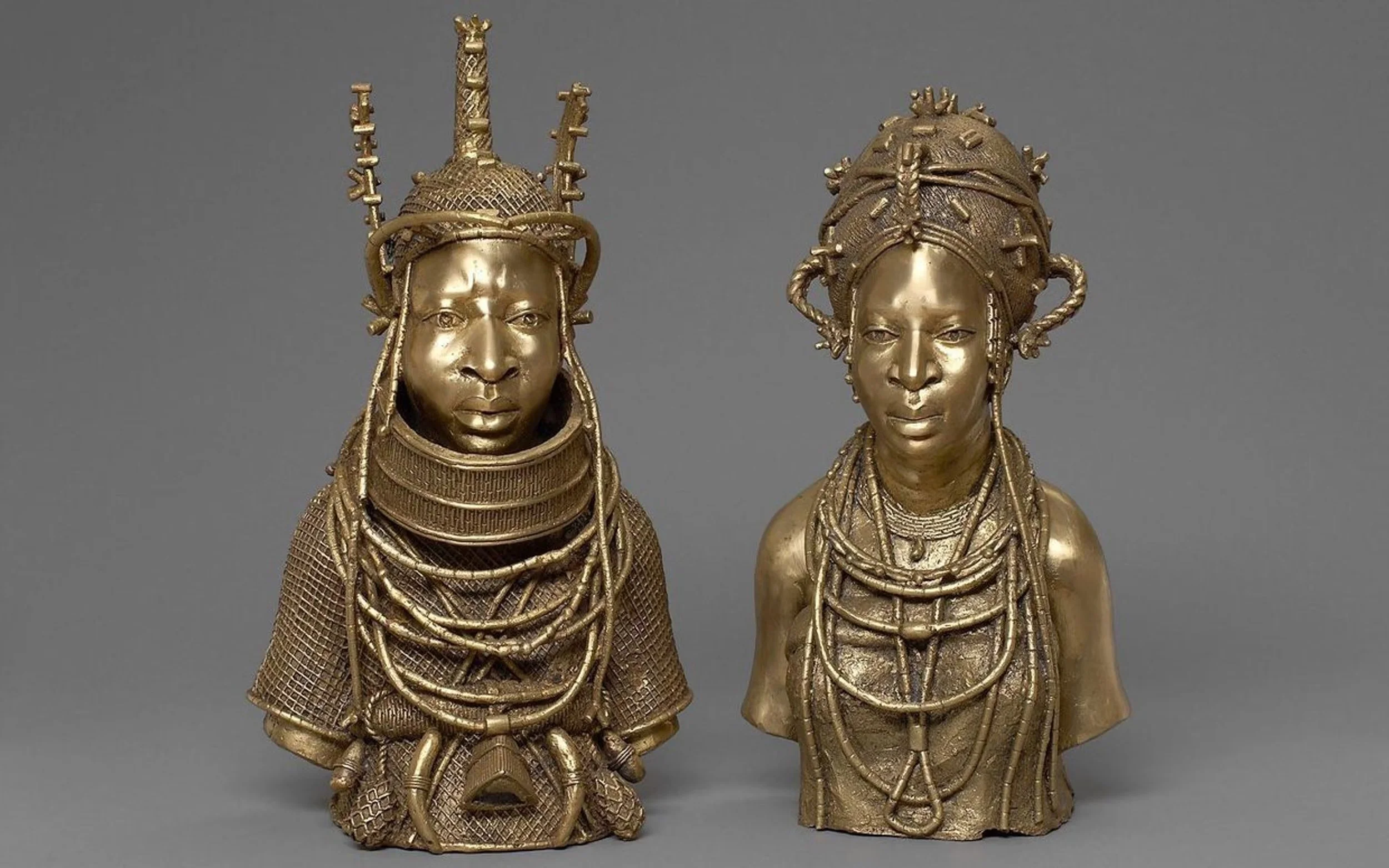
Pair of Busts: King (Oba) and Queen, 2006. Edo, Nigeria. Brass. Weltmuseum Wien, Vienna (184.376 a, b)
7.Great Zimbabwe (c. 1100–1450 CE)
Africa's Greatest Medieval City: Great Zimbabwe, located in modern-day Zimbabwe, was the capital of a powerful kingdom that dominated the interior of southern Africa between the 11th and 15th centuries. At its height, the city is estimated to have housed up to 18,000 people, making it one of the largest pre-colonial cities in sub-Saharan Africa. The name 'Zimbabwe' itself derives from the Shona phrase meaning 'great stone houses' or 'venerated houses.'
Engineering Without Mortar: The most striking feature of Great Zimbabwe is its extraordinary dry-stone architecture, massive granite walls constructed without mortar, many still standing after 800 years. The Great Enclosure, the largest ancient structure in sub-Saharan Africa, features walls up to 11 metres high and 5 metres thick. The precision with which the stones were selected and fitted together without binding material speaks to a sophisticated understanding of engineering and construction.
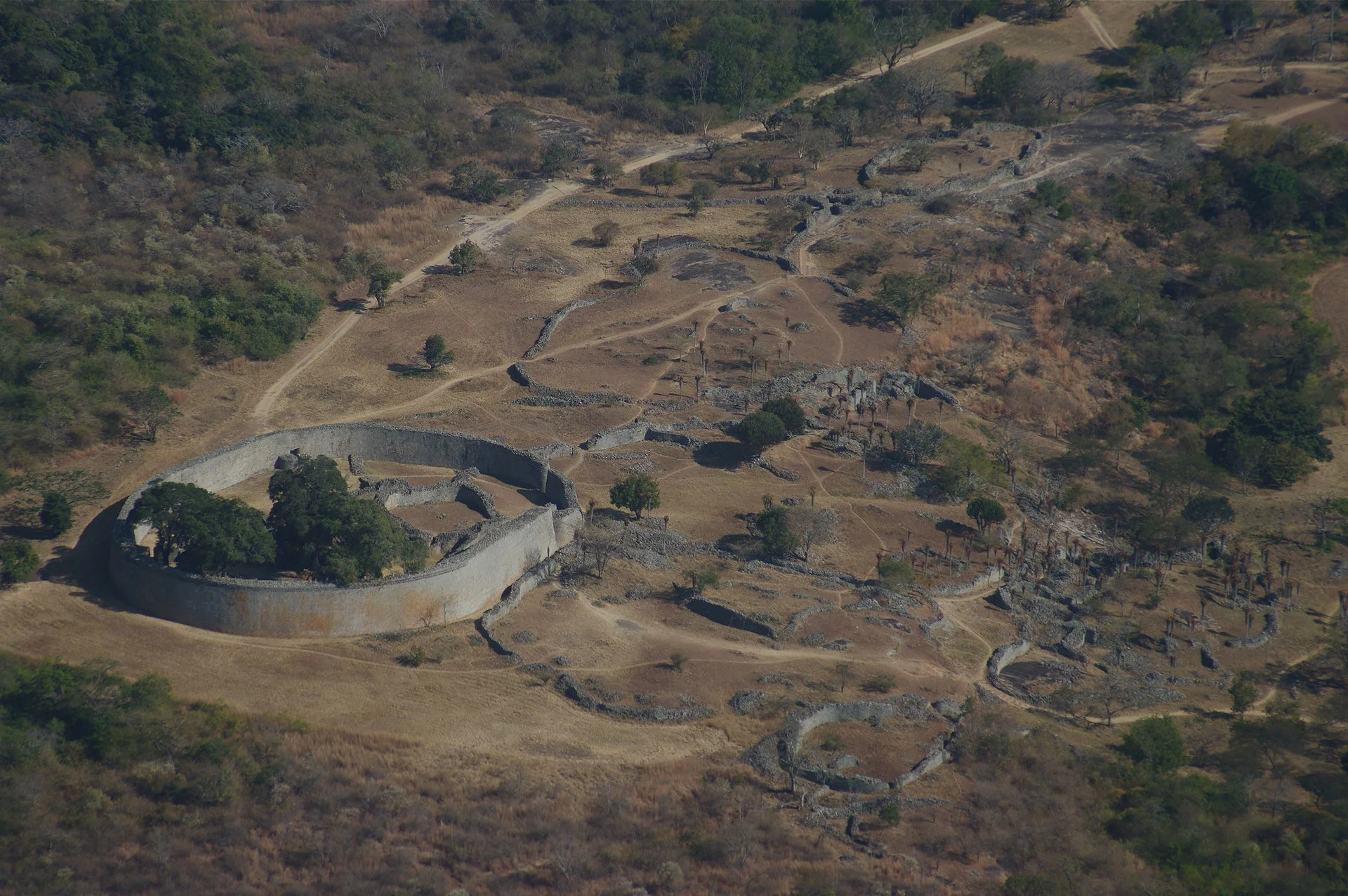
The Great Enclosure
Gold, Ivory, and Indian Ocean Trade: Great Zimbabwe controlled lucrative trade routes connecting the interior's gold and ivory resources to the Indian Ocean coast and markets in Arabia, Persia, and China. Archaeological discoveries at the site include Chinese porcelain, Persian pottery, and Arab glass beads, confirming Great Zimbabwe's role as a node in a vast international trading network centuries before European contact.
8.Zulu Kingdom (c. 1816–1897 CE)
Military Innovation in Southern Africa: The Zulu Kingdom rose to prominence in the early 19th century under one of history's most formidable military innovators. Before the Zulu, the region now known as KwaZulu-Natal in South Africa was home to dozens of loosely affiliated clans. Within a generation, these were forged into one of the most powerful military forces in African history.
Shaka Zulu: Reformer and Conqueror: Shaka Zulu, who came to power around 1816, revolutionised warfare in southern Africa through a series of radical innovations. He replaced the long-throwing spear with the iklwa, a short stabbing spear and introduced the famous 'bull horn' battle formation, in which soldiers encircled the enemy with coordinated flanking movements. He also instituted a rigorous regimental training system that created a disciplined, highly mobile army. These changes allowed Shaka to rapidly conquer and absorb neighbouring clans, expanding Zulu territory dramatically.
Legacy and the Anglo-Zulu War: The Zulu Kingdom reached a defining moment in 1879 during the Anglo-Zulu War, when Zulu forces inflicted one of the most significant defeats ever suffered by the British Army at the Battle of Isandlwana. Though the kingdom was eventually subdued later that year, its fierce resistance became a symbol of African agency and military strength in the face of colonial expansion.
9.Kingdom of Kongo (c. 1390–1914 CE)
Central Africa's Most Sophisticated Polity: The Kingdom of Kongo flourished across what is now the Democratic Republic of Congo, Angola, and parts of Gabon and the Republic of Congo. At its peak in the 15th and 16th centuries, it was one of the most politically sophisticated states in all of Africa, with a centralised government, provincial administration, and a currency system based on nzimbu shells.
Diplomatic Relations with Europe: The Kingdom of Kongo was among the first African states to establish formal diplomatic relations with a European power. When Portuguese explorers arrived in the 1480s, the Kongolese king Nzinga a Nkuwu engaged them as equals, eventually converting to Christianity and establishing an ongoing exchange of ambassadors, missionaries, and trade. His successor, Afonso I, corresponded directly with the King of Portugal and even sent Kongolese nobles to study in Lisbon — a remarkable two-way cultural exchange.
Decline and the Slave Trade: The Kingdom of Kongo was devastatingly affected by the transatlantic slave trade. Portuguese and later other European traders, often working with local collaborators, funnelled enormous numbers of enslaved people through Kongolese ports over more than three centuries. The resulting political instability, population loss, and internal conflict eroded the kingdom's cohesion, though Kongolese identity and cultural traditions survived in powerful ways — most notably in the African diaspora communities of Brazil, Cuba, and the Caribbean.
10.Ashanti Empire (c. 1670–1902 CE)
Gold, Governance, and the Golden Stool: The Ashanti Empire emerged in the late 17th century from the unification of Akan-speaking peoples in what is now Ghana. Founded by Osei Tutu with the spiritual guidance of his advisor Okomfo Anokye, the empire's founding mythology centres on the legendary Golden Stool, said to have descended from the sky and embodying the soul of the Ashanti nation. The Golden Stool was never to be sat on; it represented the collective spirit and sovereignty of the people.
Military Resistance to British Colonialism: The Ashanti were among the most determined resisters of British colonial expansion in West Africa, fighting a series of conflicts known as the Anglo-Ashanti Wars spanning from 1823 to 1900. They achieved significant military victories, including the defeat of British forces at the Battle of Nsamankow in 1824. The Ashanti resistance became a symbol of African defiance against colonialism, and their final subjugation in 1902 came only through overwhelming British force.
Cultural Legacy: The Ashanti Empire's cultural legacy is among the most vibrant in Africa. Their mastery of gold craftsmanship, kente cloth weaving, and oral traditions has left a deep imprint on Ghanaian and broader African identity. The Ashanti Kingdom continues to exist today as a constitutionally recognised traditional state within modern Ghana, with the Asantehene (King) remaining a figure of enormous cultural and moral authority.